
Artist interview: Daisy Doig
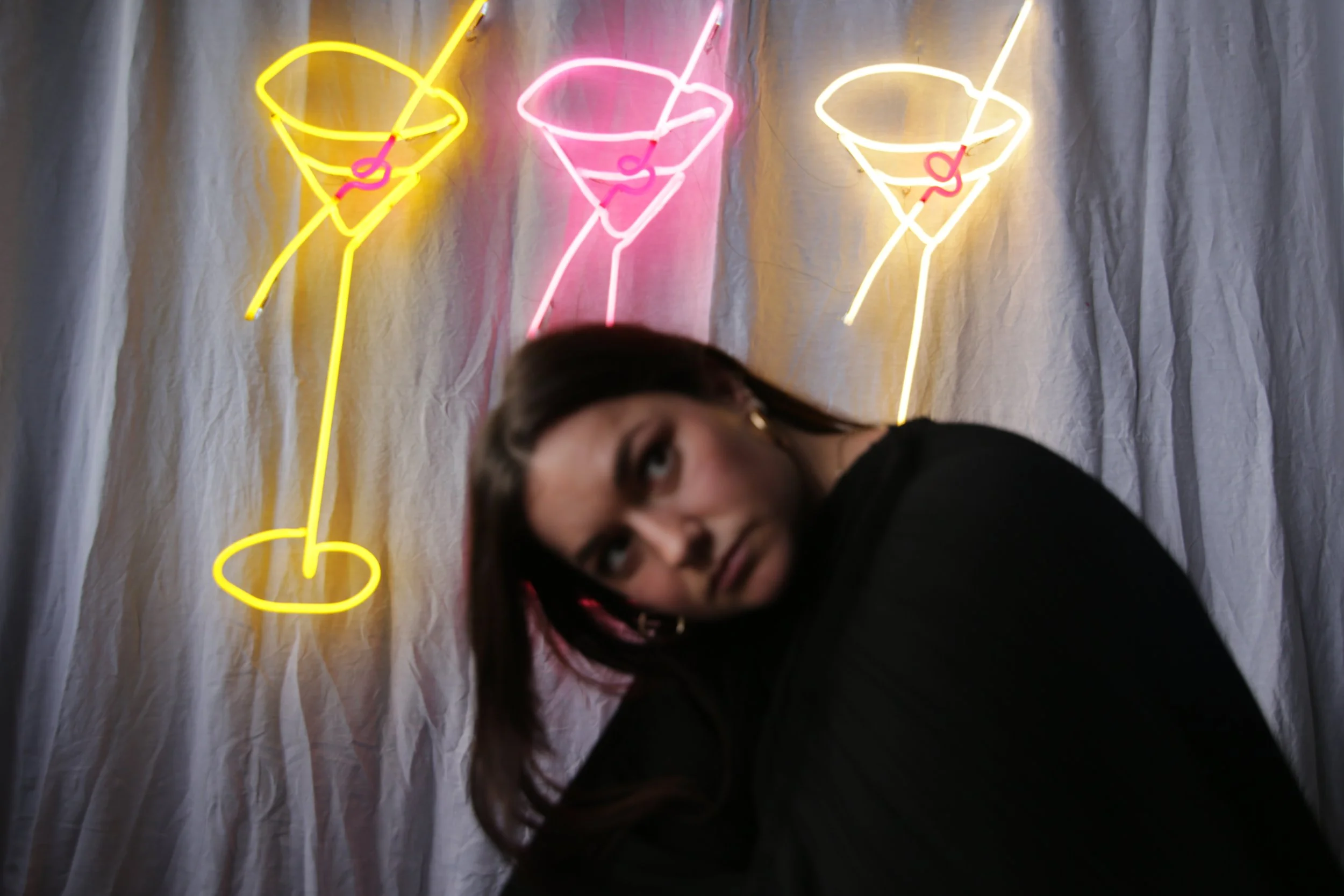
Photo courtesy of the artist
“Is it still art if it’s not turned on?”
That’s the intentionally provocative question I ask neon artist Daisy Doig, who suspiciously replies “I think so…” before pausing to consider whether or not I’m being serious. But I am, and it is, and we soon find ourselves analysing the fact that her latest installation, at The Smallest Gallery in Soho, has two very distinct appearances. At night, pink neon illuminates a dozen items commonly found in a garden shed. By day, and specifically when the neon isn’t on, the stark white tubes remind me of crime scene chalk roughly outlining the recently deceased. Which is fitting since the collection of weathered tools that once belonged to her grandmother have clearly seen better days.
Born and raised in Brighton, Doig is in the early stage of an art career she didn’t plan on having. She attended uni in London (not for art) but like many graduates she soon realised that a degree and a direction are two very different things. After various hospitality jobs and a year in Australia she found herself once again living with her parents where she was surprised to find that her age and worldly experience opened new doors of curiosity that she never even noticed when growing up.
Doig’s father, Andy, has been working with neon since 1992 in both a commercial and artistic capacity. He also runs Neon School, which provides practical classes about how glass tubing is heated, manipulated and filled with gas. “Show me,” was the simple question it took her almost a quarter century to ask him, and Doig now wonders why it took her so long to do so.
It would be a stretch to say her newfound appeal was love at fight sight, but her curiosity and interest in neon has certainly been fast tracked and greatly aided by having an expert in the family. Doig comments that it’s “really amazing having someone as skilled as he is to be my teacher” but quickly follows that with comments about how tough he is, his rigorous process and how he’s focussed her on mastering the basic skills and techniques. It’s something all artists go through, but especially critical with neon because it is an incredibly unforgiving medium.
Misshapen clay can be mashed up and re-moulded before you fire it into a ceramic. You can touch up a disappointing portion of a painting, or even completely whitewash the canvas and start fresh. But neon? If you crack the glass then it’s back to square one, and Doig explains that just getting to square one is about as complex as trying to design a roller coaster. There are practical restrictions to both the length of a tube and how tightly the glass can bend. Only limited colours of glass are made, which requires powder coating to achieve the rest of the spectrum. And then there’s the electrics, which create both technical as well as aesthetic complexities to be navigated. Doig neatly wraps up her crash course with a firm summary: “you can’t change it once you start”.
Fittingly, when I first met Doig in the gallery she was carrying around hand drawn blueprints for the show while carefully navigating her way through the space in plastic shoe covers (to keep the floor clean, not electrical grounding as I’d assumed). I was only allowed to peek my head inside as the work is very fragile and it’s a lot more chaotic behind the scenes than I’d expected. What you can’t see from the street is the complex network of scaffolding, transformers, extension leads and power cables. Seeing all these meticulously mapped necessities that were never intended to be exposed was like taking a back-stage tour of a West End theatre, so we retreat to Dean Street to view the stage as it was meant to be seen.
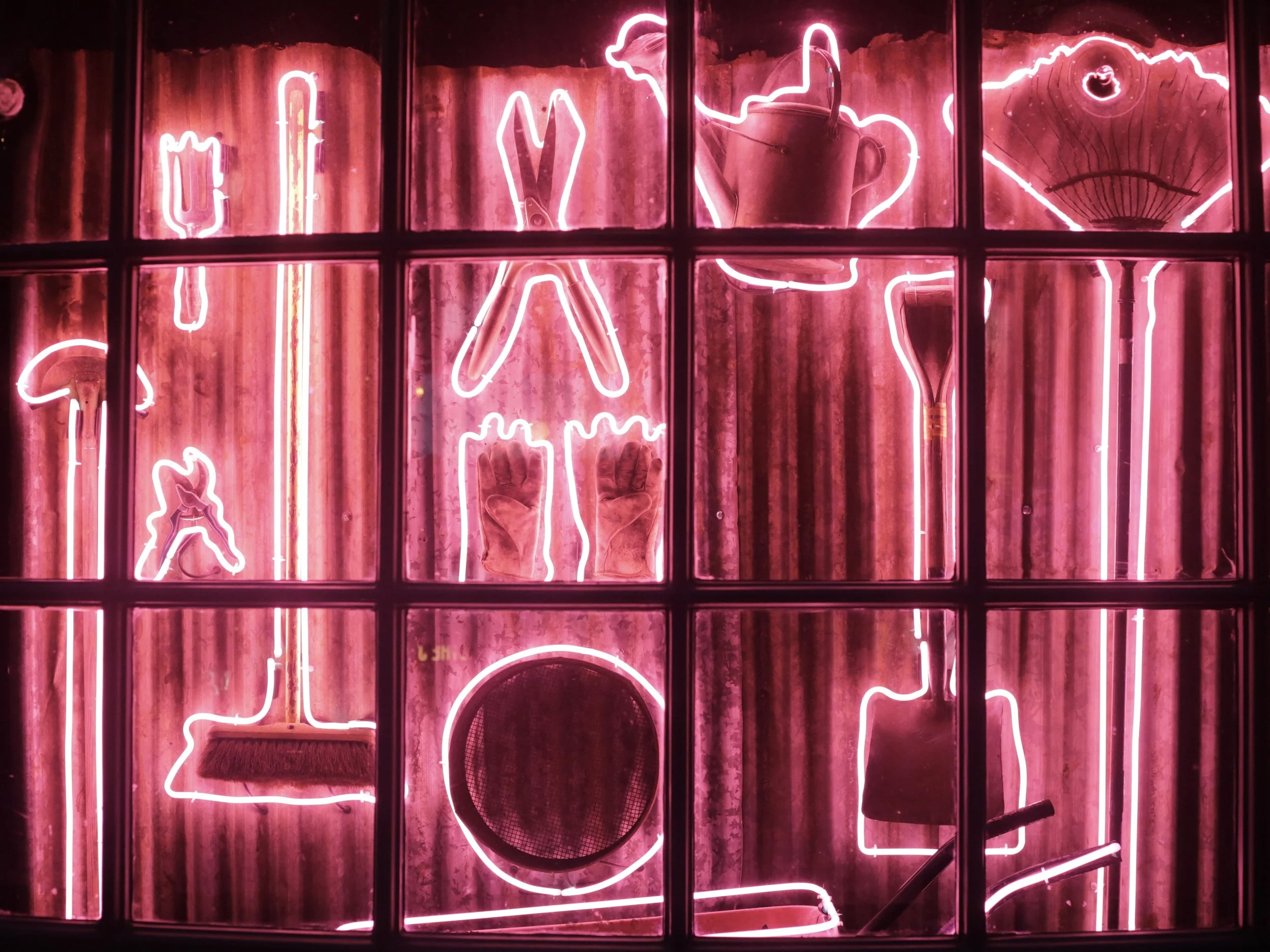
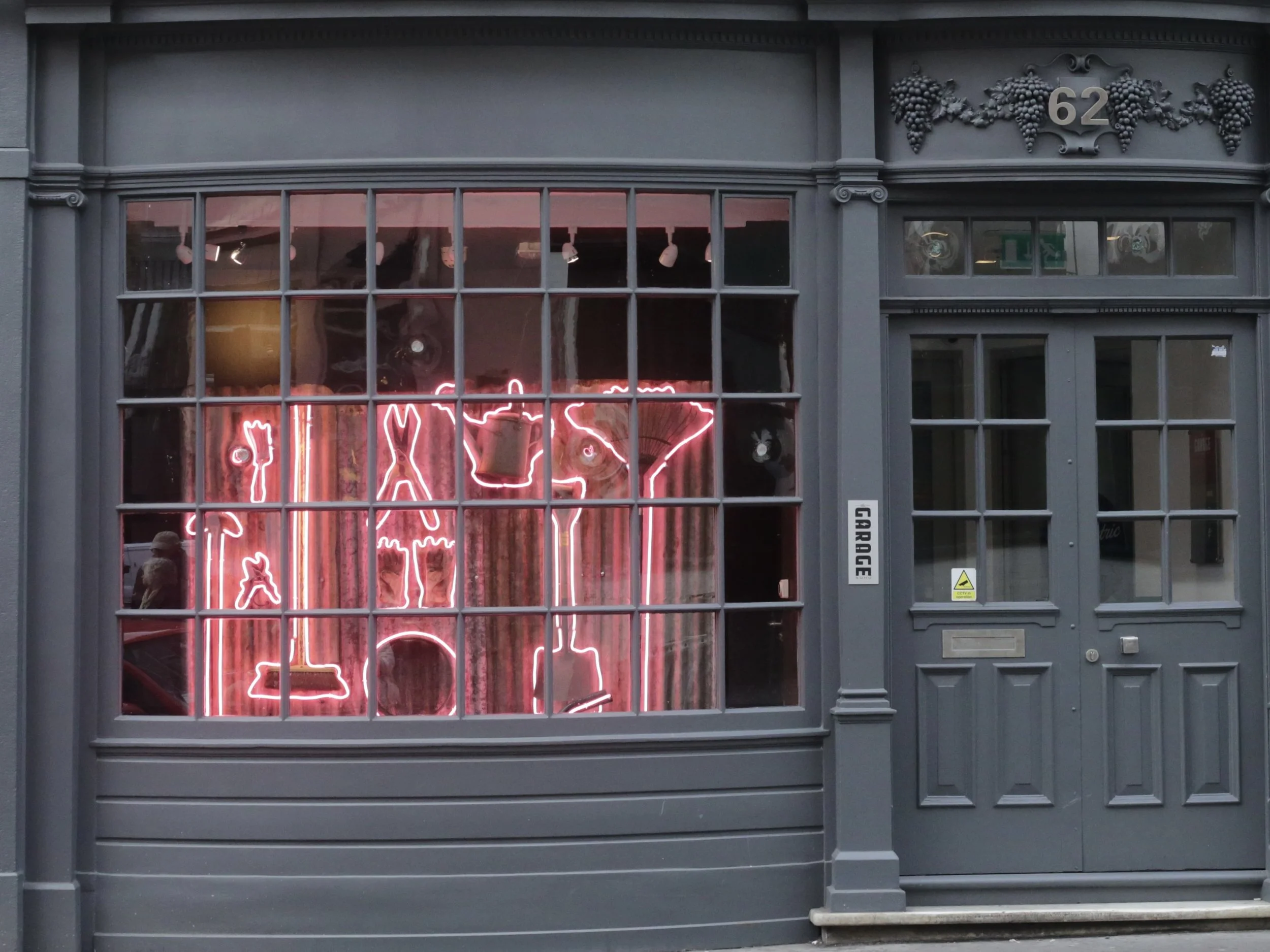
Despite all the rust and a wheelbarrow filled with dirt there’s something incredibly clean and orderly about the way the work is presented. Doig premiered an earlier version at Glastonbury ‘25 and although this iteration adds new elements the core idea remains the same. “I’m bringing them back to life,” she tells me, referring to the well-worn tools that clearly would be ineffective in any attempts to fulfil their original duty. Doig is giving them a second life, and an angelic pink halo effect that is appropriate to the new remit she is bestowing upon them. These once loved objects have new purpose and meaning because of the memories they trigger and the thoughts they inspire in viewers that pass by.
Doig admits that she is still very much in the learning stage of her artistic practice. She tells me about her interest in Still Life and how she likes being literal in the way she uses neon as a representational medium for objects she is drawn to. The technical limitations of the art form often forces an over-simplification of shapes, but unlike Picasso’s Bull she isn’t trying to see how far you can reduce something and still convey meaning. She is constantly thinking “how could I put my own spin on it? As if I had painted it, but with neon.”
There is noticeable excitement in Doig’s voice as she discusses the process of discovering a sense of what her own style might be. She wants to learn “how far you can push it” to help her better understand which conceptual ideas she might be able to realise. As she’s already learned from her father, it takes a lifetime to master the basics and even then there is still so much to learn as an artist. But what she’s also already learned, entirely on her own, is that it is a privilege to be able to say “I’ve had neon in Soho”.
A quick disclaimer:
As a Friend of the Gallery, London Art Roundup is provided with advance and behind-the-scenes access to interview the artists that exhibit at The Smallest Gallery in Soho. All contributions are voluntary. Neither the artist, gallery or London Art Roundup received any financial compensation for this interview.
Click here to read our interview with The Smallest Gallery in Soho.
Plan your visit
‘Shed’ runs until April 2026.
Visit daisydoigneon.com and follow @daisydoigneon on Instagram for more info about the artist.
Visit thesmallestgalleryinsoho.com and follow @thesmallestgalleryinsoho on Instagram for more info about the venue.
PLUS…
Subscribe to the Weekly Newsletter. (It’s FREE!)