
Artist interview: Vivien Carolyn Reinert
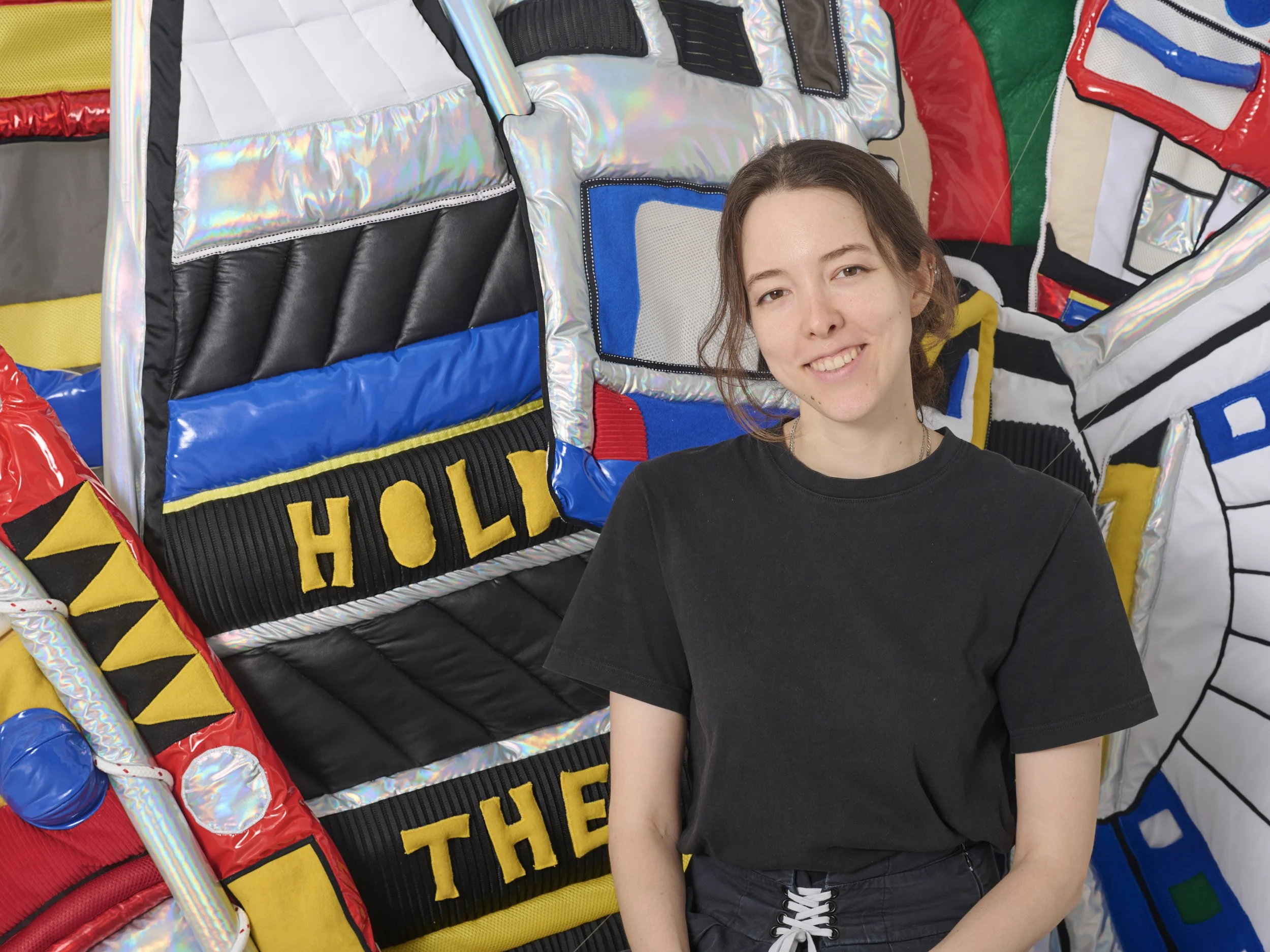
Phot credit: Dee Ramadan
The largest installation that artist Vivien Carolyn Reinert has ever created is currently hanging inside The Smallest Gallery in Soho. There’s something both poetic and fulfilling about the irony of that statement for Reinert because she’s been eager to display her work in the gallery for quite some time. Her eyes go wide when she tells me about the first time she stepped inside the space. It’s bigger inside than it looks from the street, and her excitement quickly turned to concern as she finally understood what she initially thought was cryptic advice from the gallery when they accepted her proposal: “Make more than you think you need.”
‘Underground’ is a series of eight tactile panels responding to the four transport stations framing Soho: Oxford Circus, Piccadilly Circus, Tottenham Court Road, and Leicester Square. Tube anoraks will appreciate the many details in the work, such as the yellow triangles that only appear on Central Line doors, but most everyone else will see a jumble of shapes and colours that remind me of commuters at rush hour jostling for elbow room, trying not to get uncomfortably close to each other. There is nowhere for the large panels to escape to, and Reinert says she is pleased with the way she finally managed to fill the space.
Reinert originally submitted a proposal to the gallery in 2021 that, for various reasons, “just wasn’t right”. One year later her second attempt was deemed too vague, a point at which most artists would’ve cut their losses and moved on. Reinert used those experiences to enhance the learning curve she has been, and continues to be on, as an artist. Willing to experiment, constantly moving forward and unafraid of failure. The ‘Underground’ project was her third proposal to the gallery, and she was determined to make the output worth everyone’s wait.
Six weeks before the final hang I visited Reinert’s studio where she proudly showed me the first finished panel. It combined textures, shapes and snippets of iconography from the London Underground in ways that were both visually and materially elaborate. When I asked how long it took to sew it all together Reinert takes a deep breath before admitting that after she completed the piece she wasn’t happy with the outcome, so she completely took it apart, re-worked the problems and then put it all back together again. I expressed polite amazement. Reinert’s mother was much more blunt, stating: “Why did you do this to yourself?”
Good parenting requires tough love, which makes the pride that much sweeter when the results pay off. I was able to witness her mother’s glowing admiration firsthand because she flew over from Germany to assist with the install. It was a sentimental full-circle moment. Reinert tells me her mother has “talent when it comes to sewing” and credits a lot of her success to the invaluable foundation her mother instilled in her as a child: exposing her to the arts and actively encouraging her to engage in weekend museum courses, drawing competitions and a lot of sewing projects.
Reinert has both a BA Hons (CSM, 2019) and a MA (RCA, 2021) in textiles and has held a variety of jobs in the fashion industry, but is happiest now that she is working for herself and her art, confidently stating: “I’m an illustrator and a painter, and I can apply that better in textiles than in fashion.” Which brings us to the word that I’m reluctant to utter but every textile artist has to address: craft.
Though contemporary art has increasingly embraced textile practices, I’m curious to know if the craft bias has impacted Reinert. She admits that “working with textiles can present practical challenges within the fine art world, particularly around preservation, display and collecting” and laments that she still occasionally comes across call-outs for art exhibitions that exclude textile submissions, but none of that has swayed her resolve. “I don't actually dread the word craft - quite the opposite. I'm proud to be a craftsperson, artist and designer and I certainly don't believe that textiles are not art.”
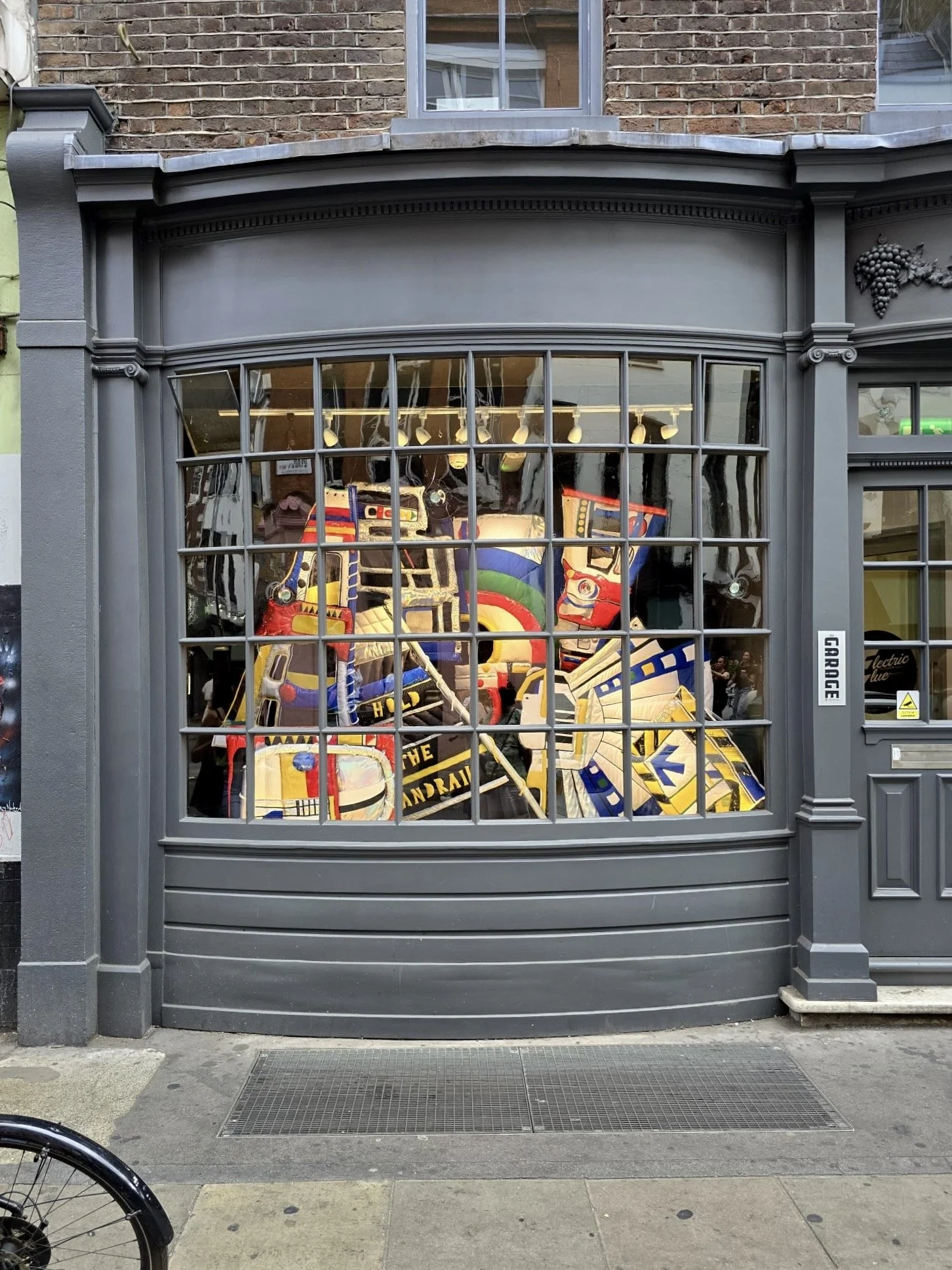
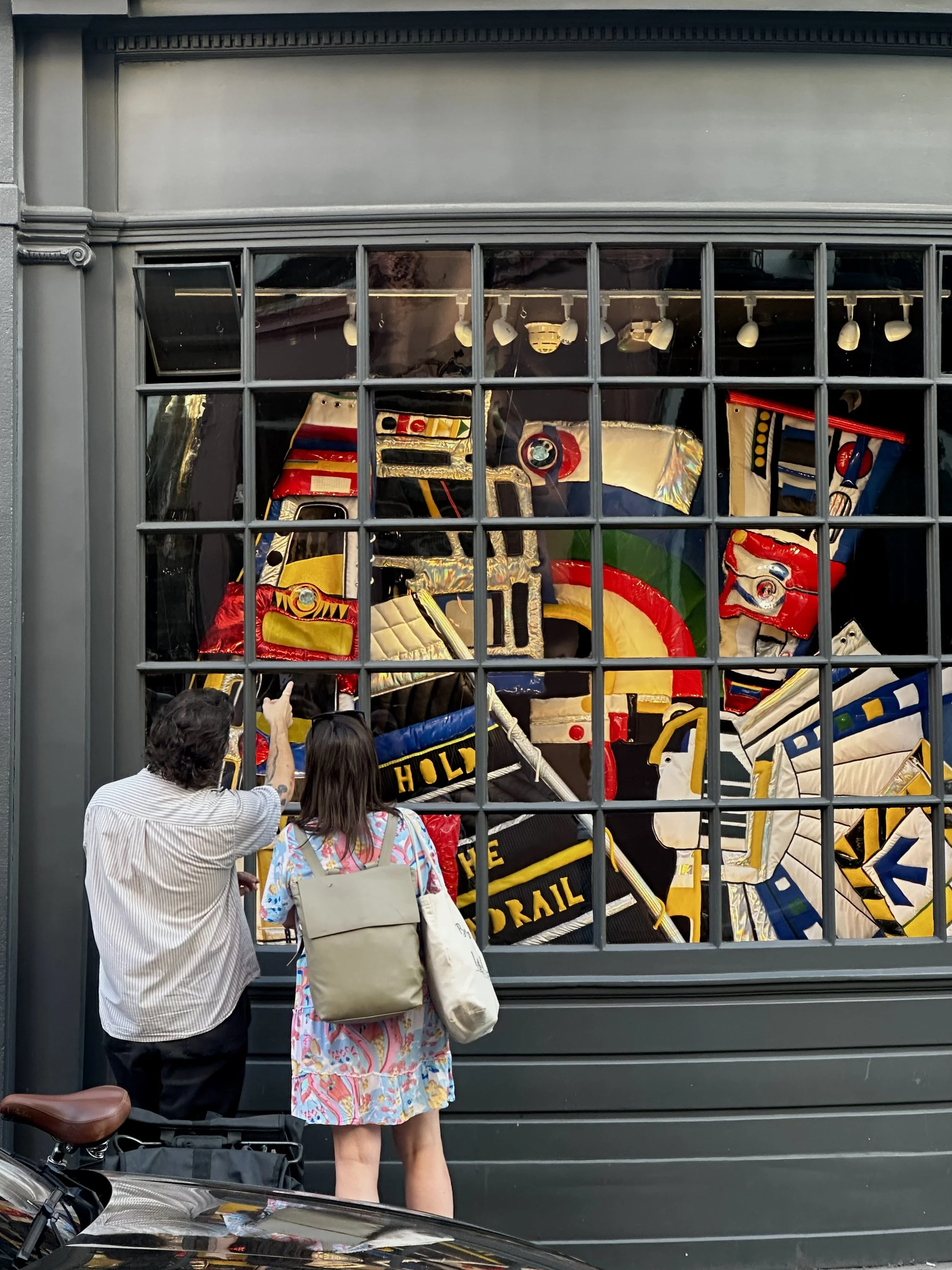
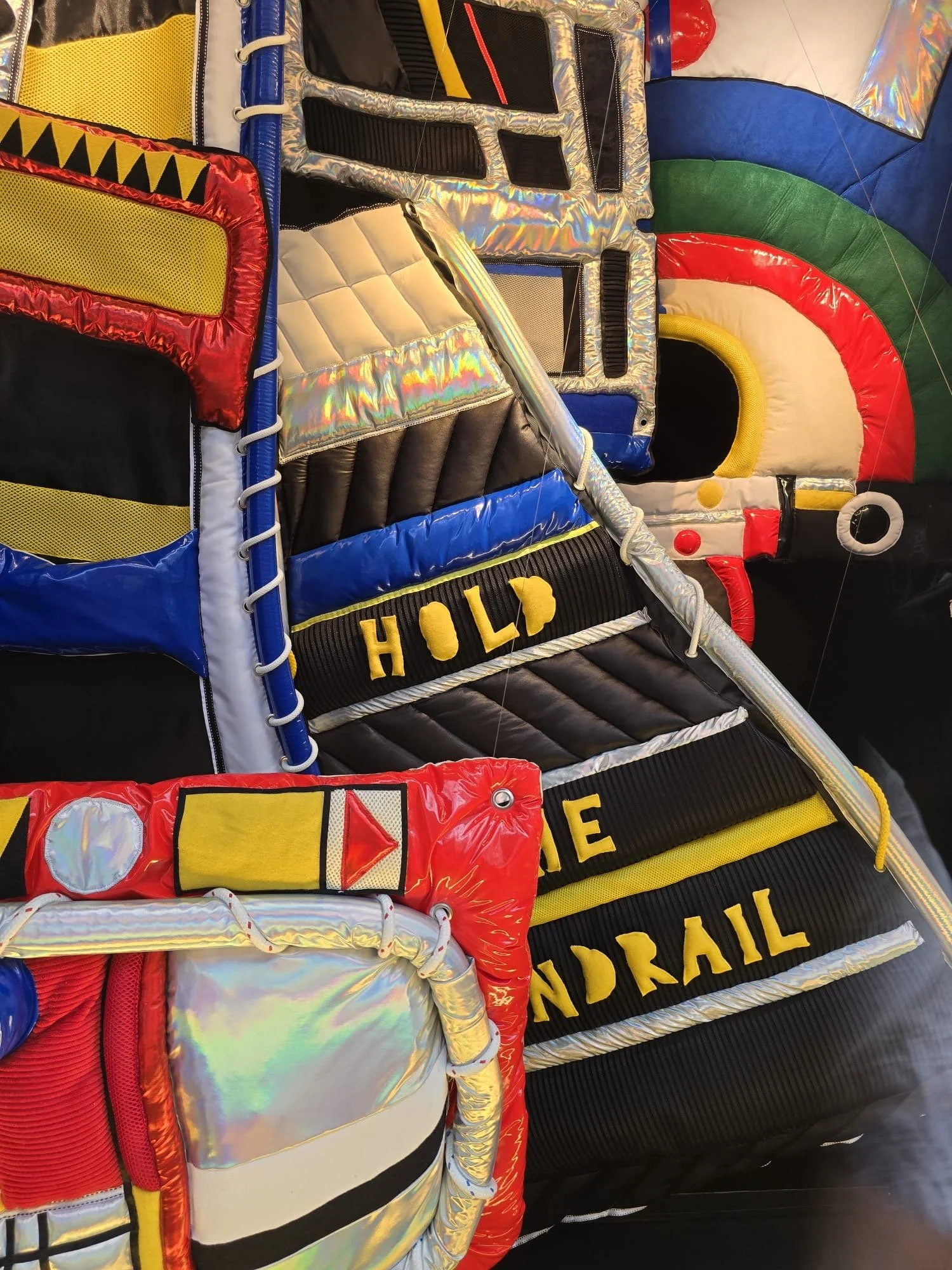
Returning to her artworks, they are distinctly abstract in shape and composition but filled with so many recognisable elements that the word abstract feels like the wrong adjective. You could oversimplify her style as a jumbled collage of familiar snippets, like puzzle pieces waiting to be rearranged into their correct place. “I see the world in colours and abstraction. In composition. And with that comes different textures.” She then pauses to examine the ragged surface of the brick wall next to our table before commenting that it’s always exciting when people realise what any of her works has been based on, but that she’s more excited when people see something completely different in her work. I then ask if her work has an ‘up’.
“I think so?” She says after a hesitation. “For me there’s a right way. You can turn it, but sometimes when you do the balance is off. It’s more fun to create something where you don’t necessarily know where it’s coming from.” Or in this instance, how. One of the things I find most impressive about her latest installation is that it was all made using a small domestic sewing machine. That presented a lot of limitations and required a lot of experimentation, but Reinert says the process helped her see what was possible.
Prior to hanging the panels Reinert embraced the opportunity to put on a jumpsuit and use a giant roller brush to turn the gallery walls black. It was not the kind of painting she had studied, a fact that was quickly pointed out to her by a well-dressed middle-aged man from Miami who politely knocked on the window to offer some unsolicited advice. Reinert invited him in to help and tells me that he accomplished more in 5 minutes than she had managed in the previous hour. It was a wise decision on her part, and not just for the anecdote.
Reinert’s life stories remind me of her textile panels: familiar yet unexpected. Like a confident mountaineer she’s aiming for a peak and knows she’ll get there even when the route hasn’t been defined, and it’s refreshing how enthusiastic she becomes as she details the challenges and learning she encountered along the way. Being open to the possibility that you don’t have all the answers seems to be one of the things that drives her, often leading to better results than she had originally envisioned or thought possible.
A quick disclaimer:
As a Friend of the Gallery, London Art Roundup is provided with advance and behind-the-scenes access to interview the artists that exhibit at The Smallest Gallery in Soho. All contributions are voluntary. Neither the artist, gallery or London Art Roundup received any financial compensation for this interview.
Click here to read our interview with The Smallest Gallery in Soho.
Plan your visit
‘Underground’ runs until October 2026.
Visit vivienreinert.art and follow @vivien_reinert on Instagram more info about the artist.
Visit thesmallestgalleryinsoho.com and follow @thesmallestgalleryinsoho on Instagram for more info about the venue.
PLUS…
Subscribe to the Weekly Newsletter. (It’s FREE!)