
The Choir of The Innocents (2010 - present)
Andrei Pandea (b.1985)
The Choir of The Innocents (2010 - present)
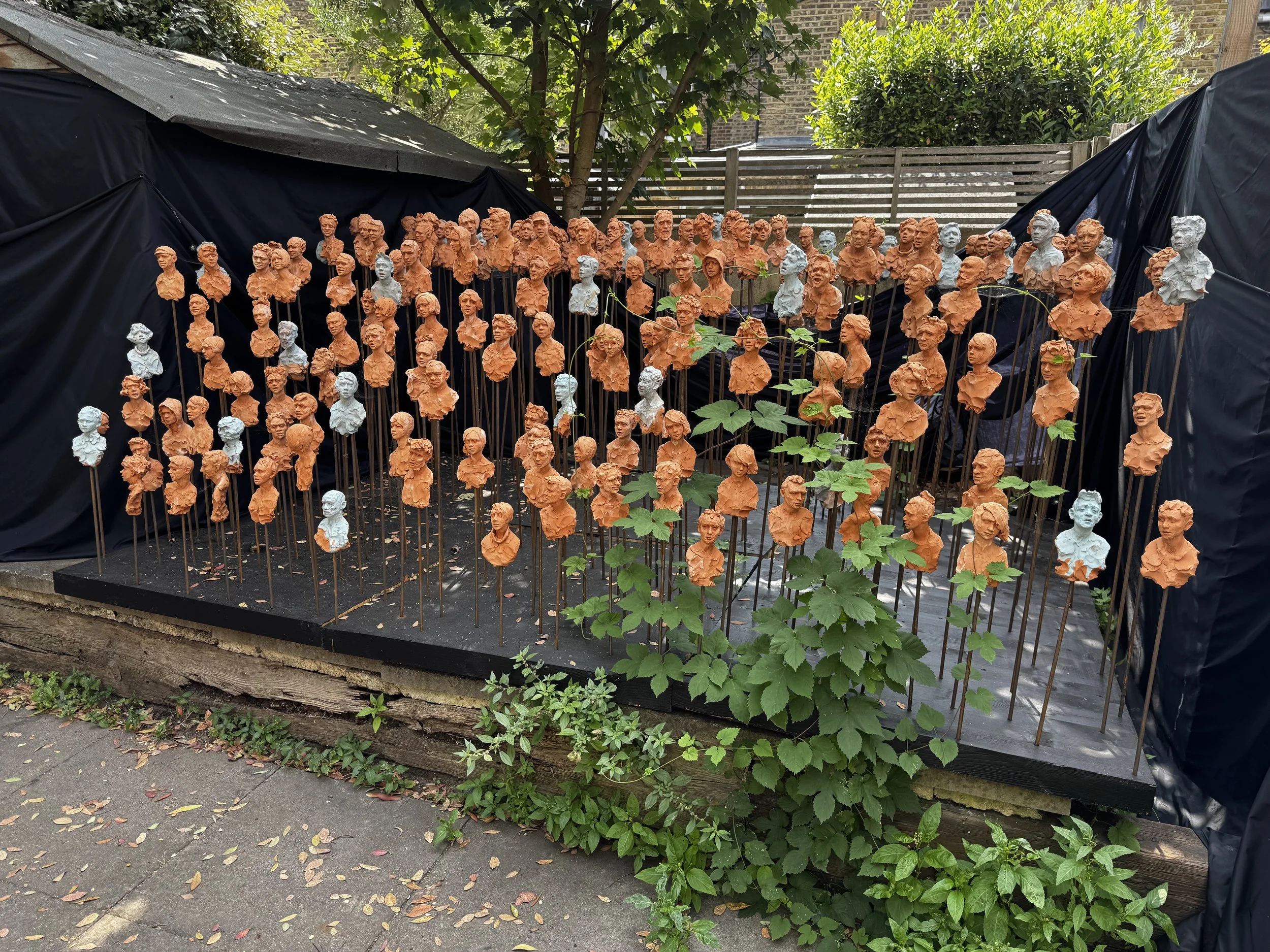
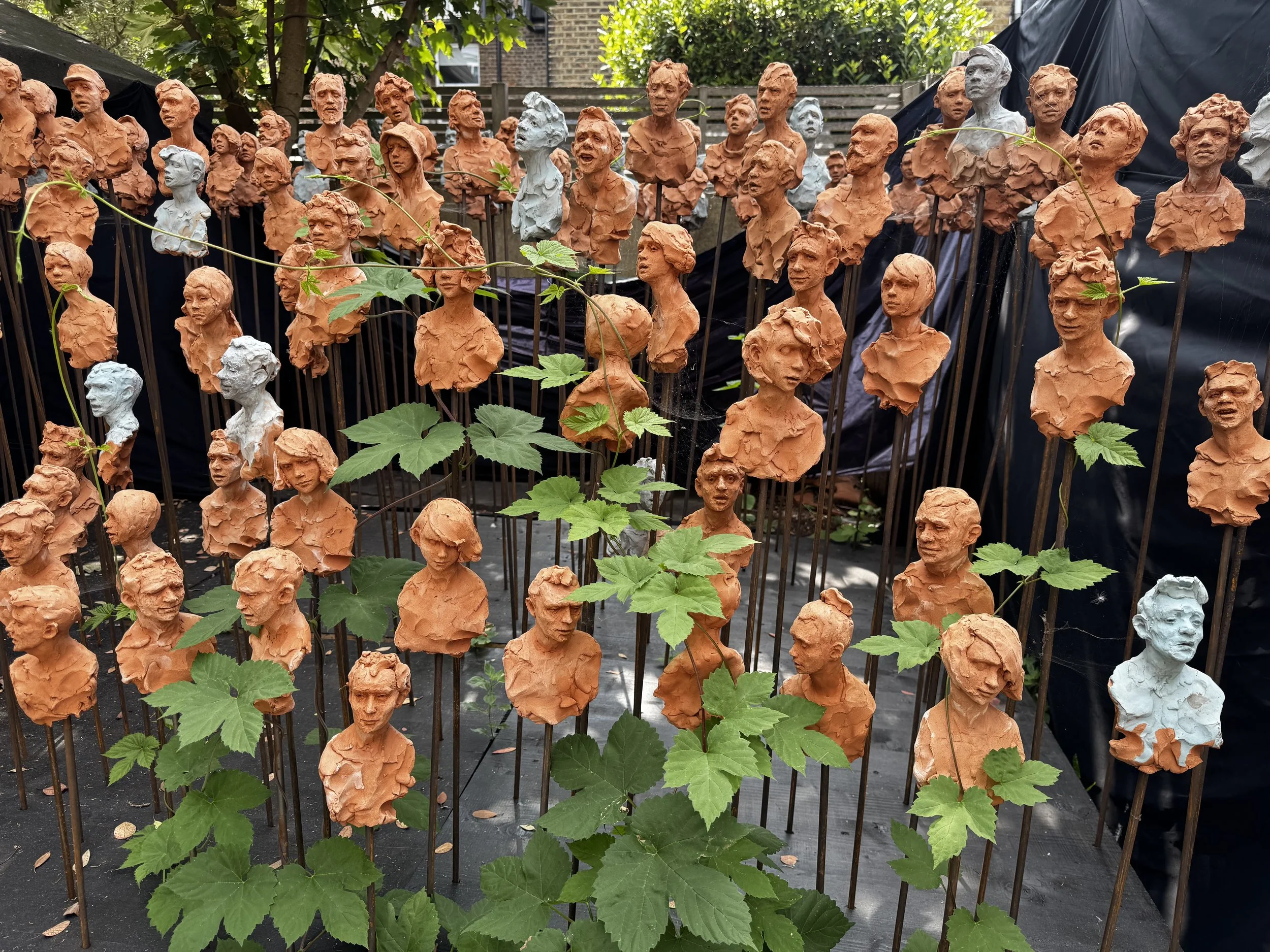
Fired clay
19-23cm H x 8-10cm W standing on steel rods 30-120cm H
Phil Taylor’s Cool Stuff / future location TBD
I don’t know what it is about London that inspires people to transform their homes into maximalist art displays but there are so many (see this, this, this and this) that I was unsurprised when someone got in touch and invited me round to view 450 sculptures in their Zone 2 garden. Here we go again, I thought. Except it was, and was not, what I was expecting.
Ok, let’s back up.
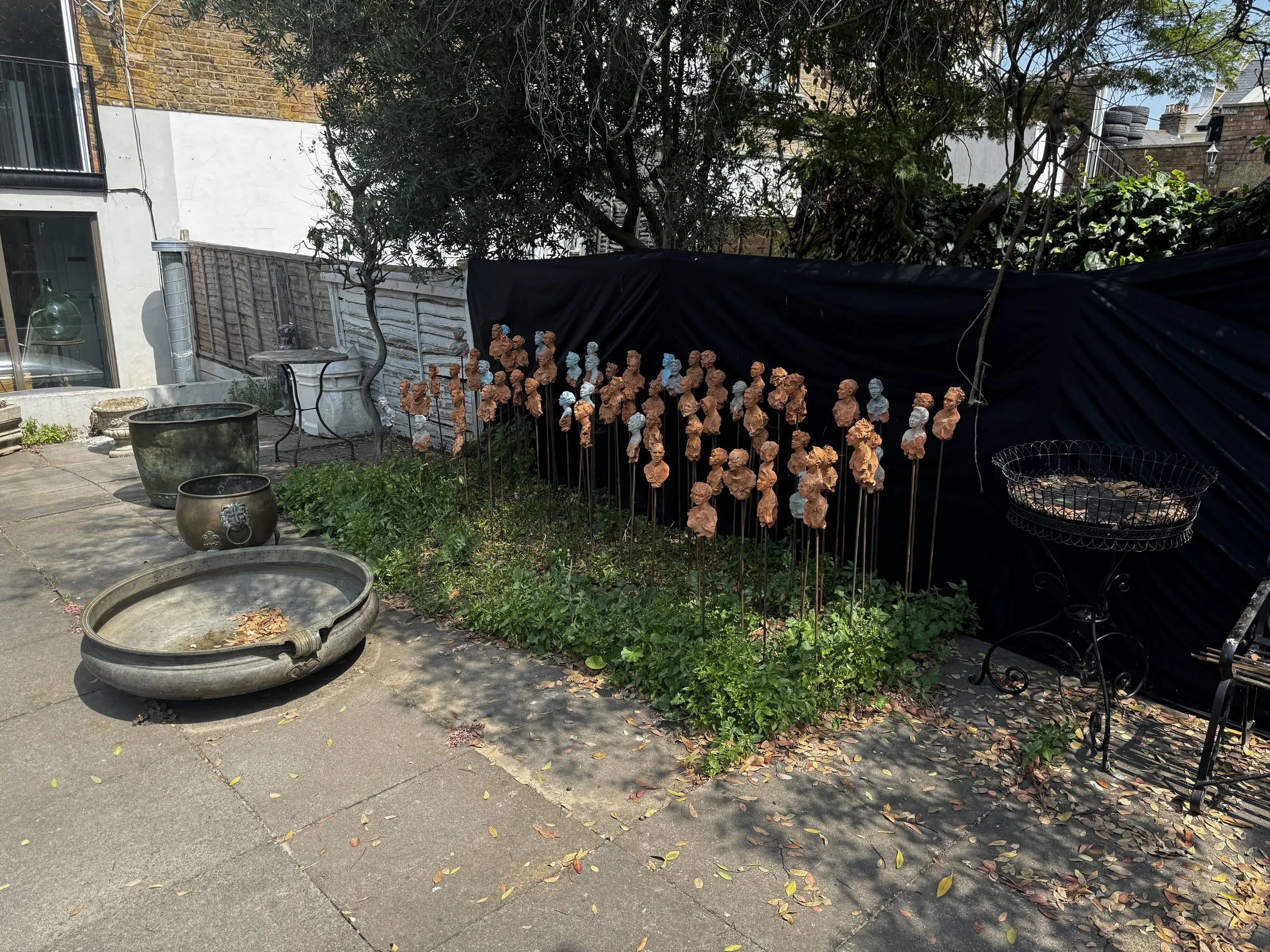
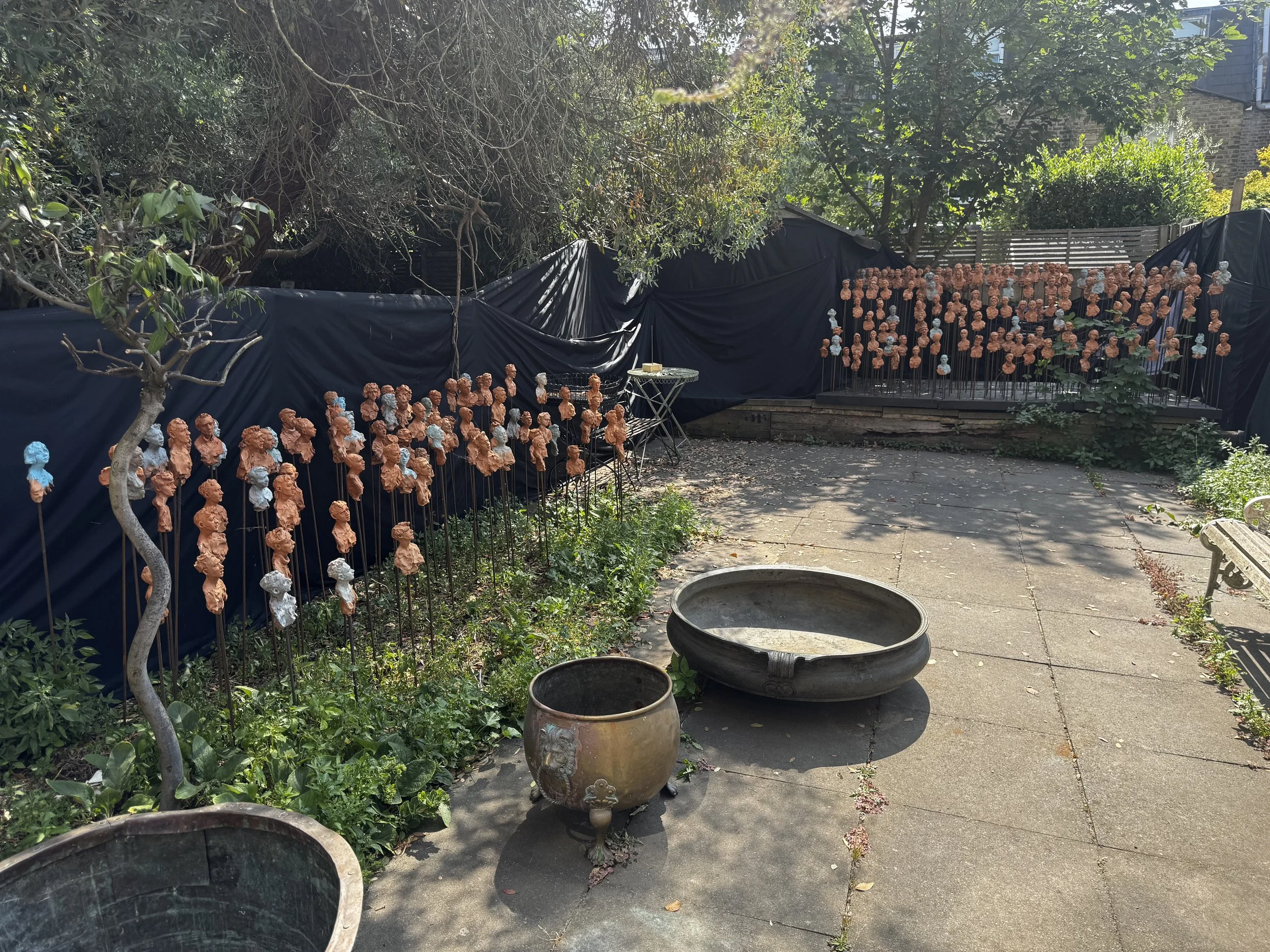
Phil Taylor is an art and antiques dealer who trades on Lillie Road. It’s one of those London streets where you only find one type of shop, like Brick Lane for curry or Bond Street for high end fashion, only in this instance it’s filled with quirky window displays. The street was originally residential so when I find myself standing in Phil’s back garden surrounded by all the terraced flats that remain above the shops it’s easy to convince myself that I’ve arrived for a summer bbq. Except instead of friendly neighbours I am being introduced to hundreds of small clay heads.
The sculptures have all been individually hand made by artist Andrei Pandea, who lives and works in Bistrita, Romania. The story of how such a large number of his sculptures found their way into Phil’s care is a heartwarming tale worthy of it’s own column, but Phil tells it best so I won’t steal his thunder. Despite having tell-tale signs of an artist’s hand and being about the size of a large fist the heads are incredibly lifelike. I found myself having staring contests with more than a few, wondering whether or not the sculpture would blink first. I lost every time.
I asked if they are friends or relatives of the artist but no one sits for them. Like many figurative artists Pandea is constantly observing people as they go about their day, making mental notes of curious facial expressions or interesting hairstyles. The curl of a lip. The way someone squints. Something will catch his eye and find it’s way into whoever he is sculpting next. He sometimes makes up to six a day but only keeps the ones that meet his high standards. I assume that means he’s a good sculptor because according to Phil, “We think Andrei has roughly 3,500 of the most recent life-like variation that you saw at my gallery. He began making them 5 years ago.”
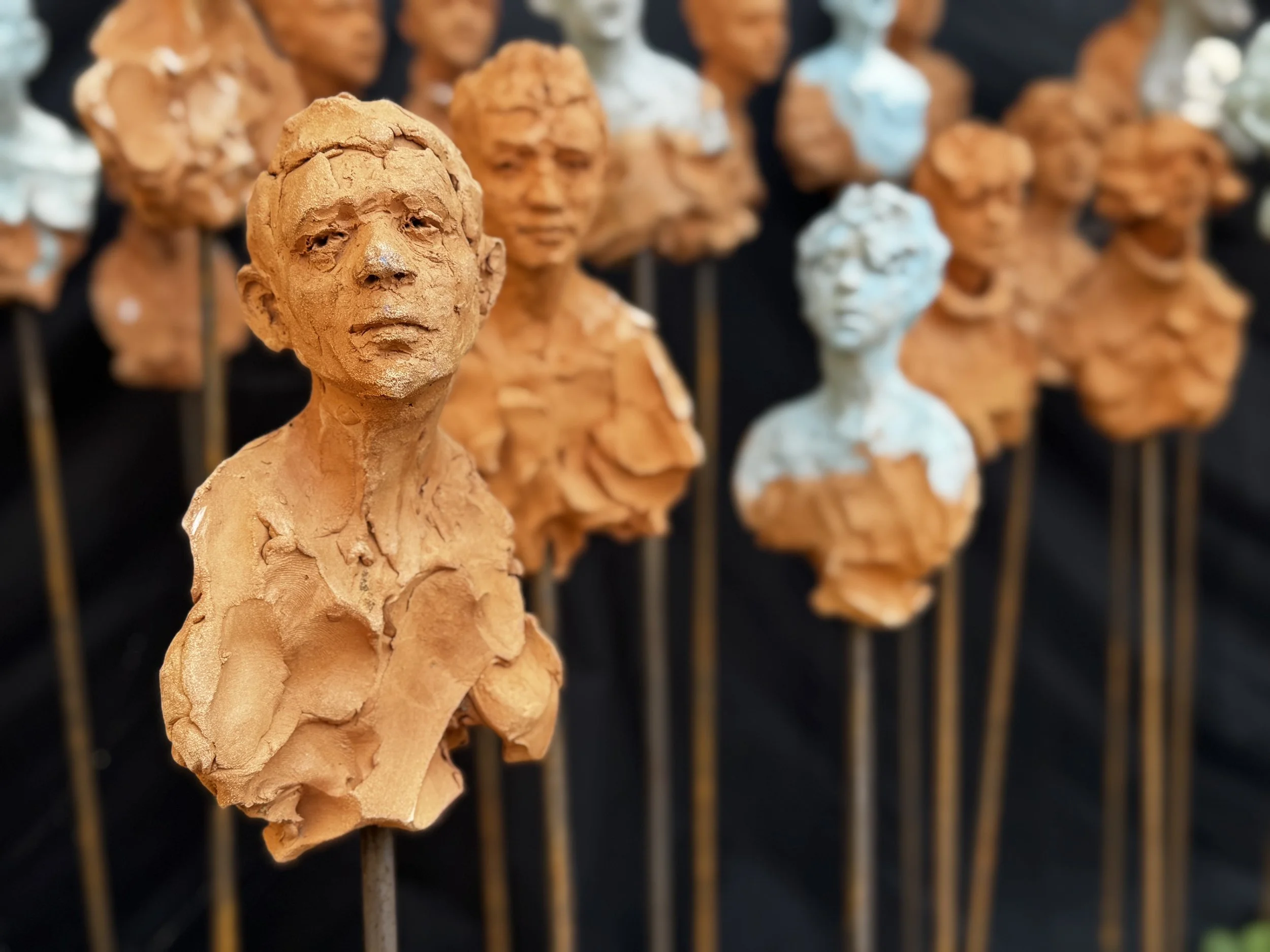
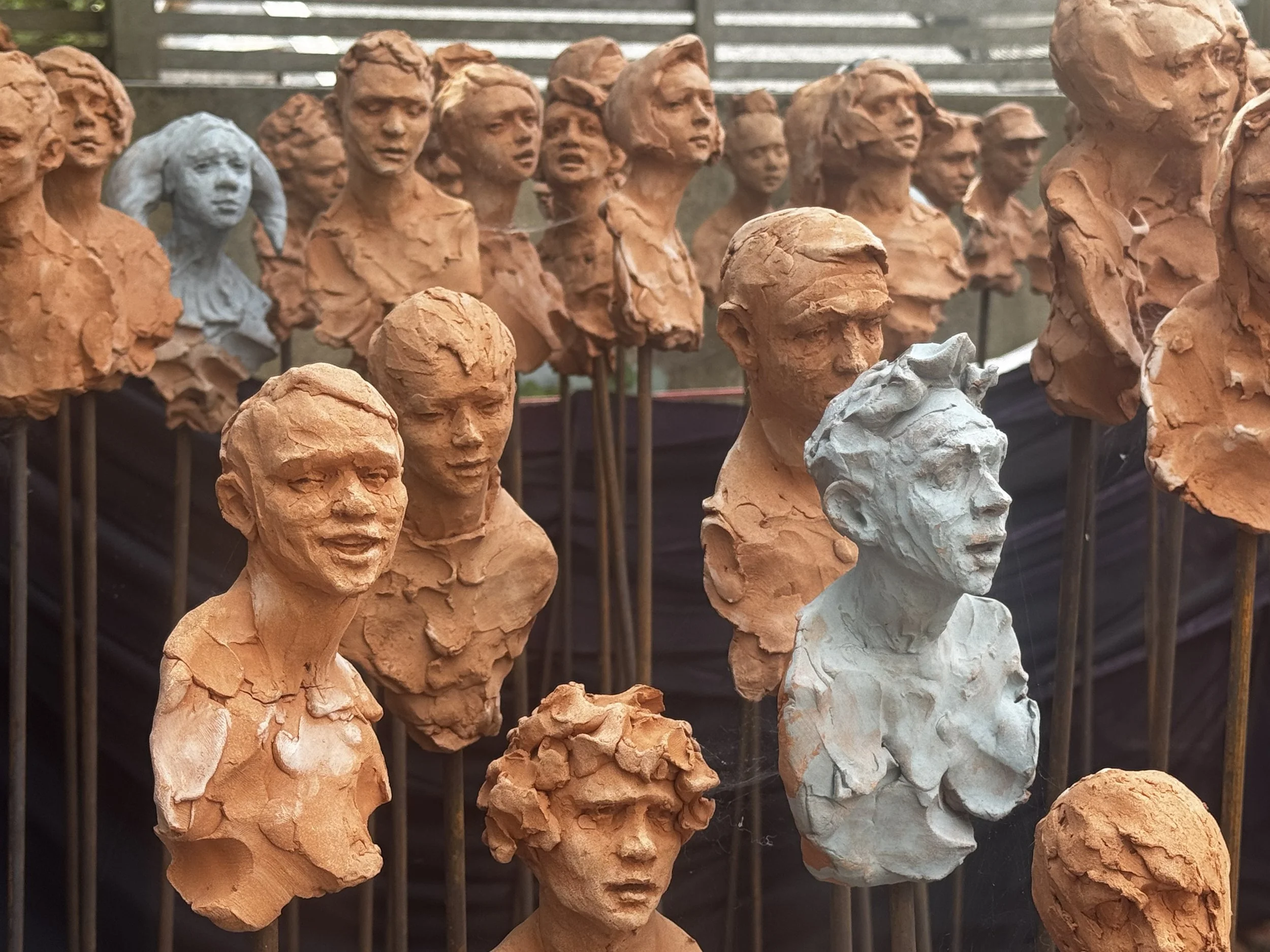
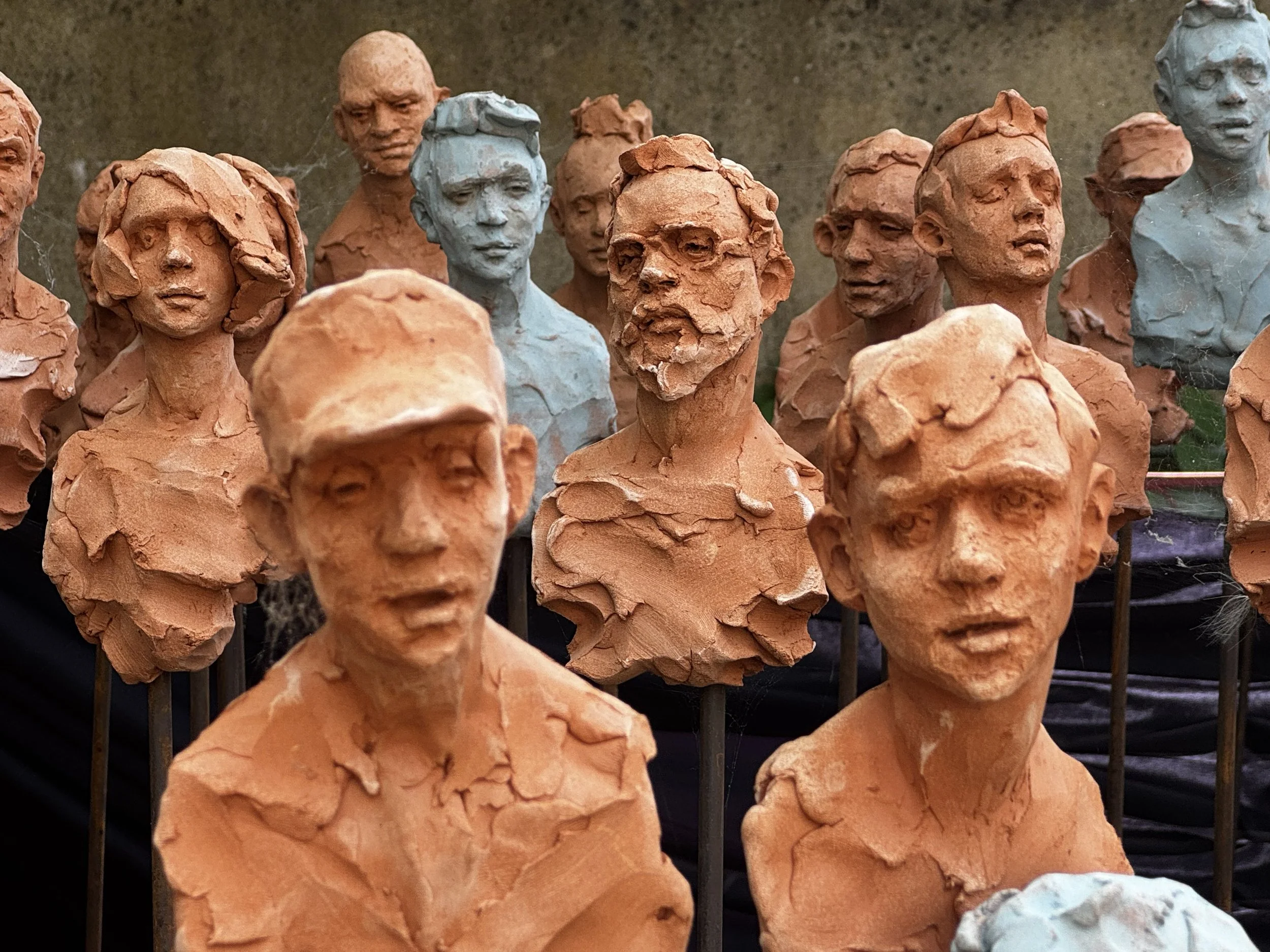
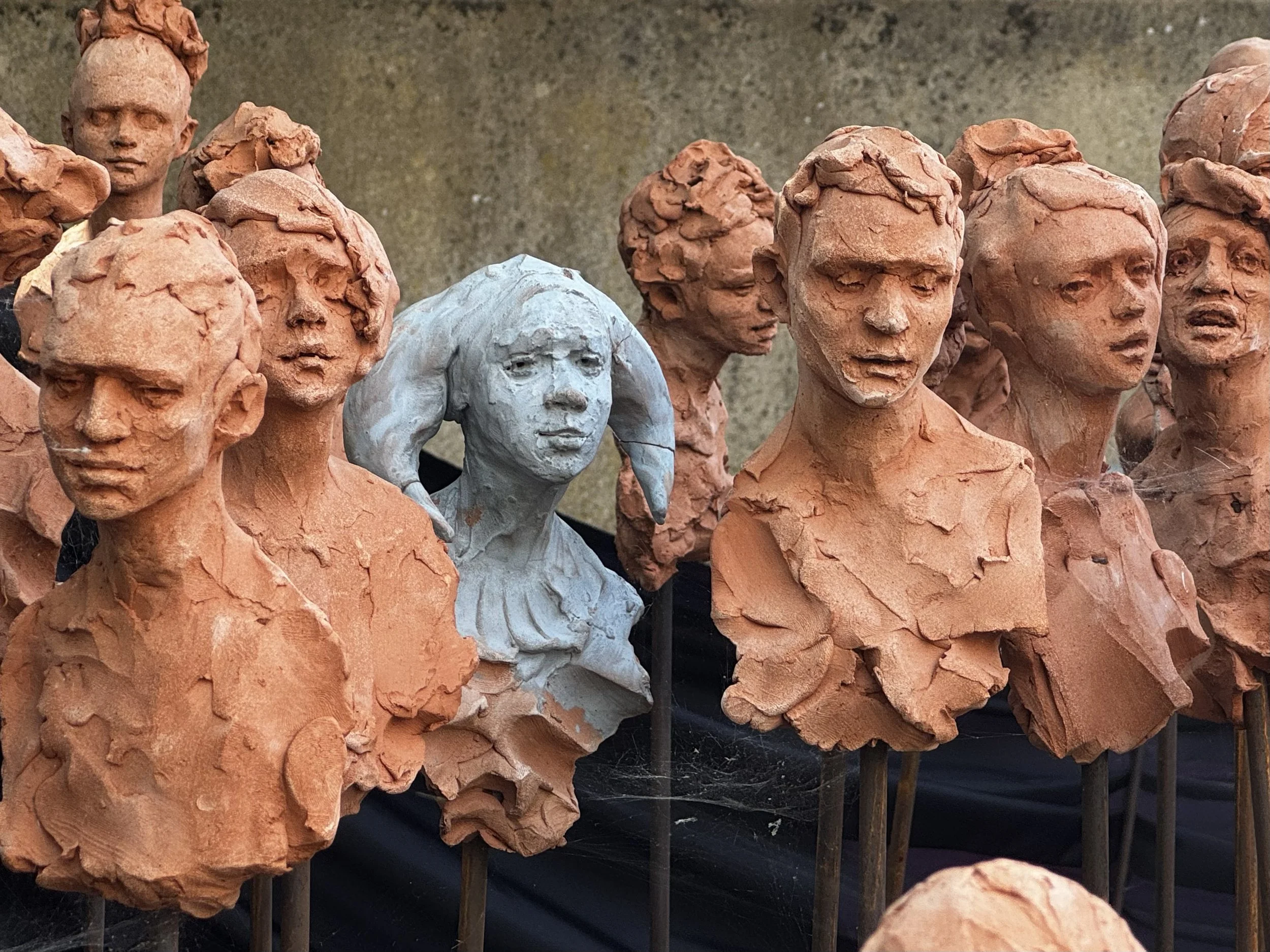
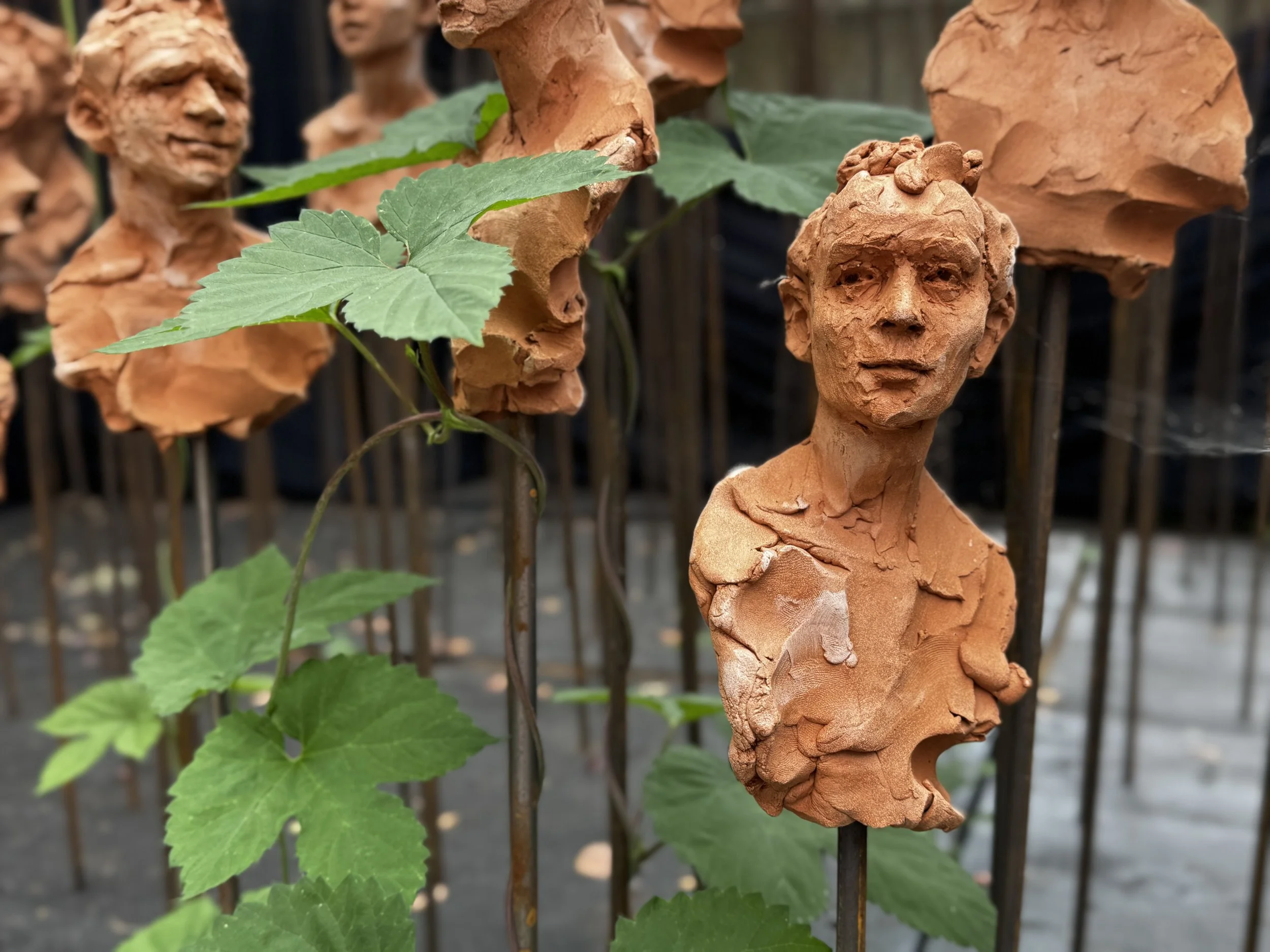
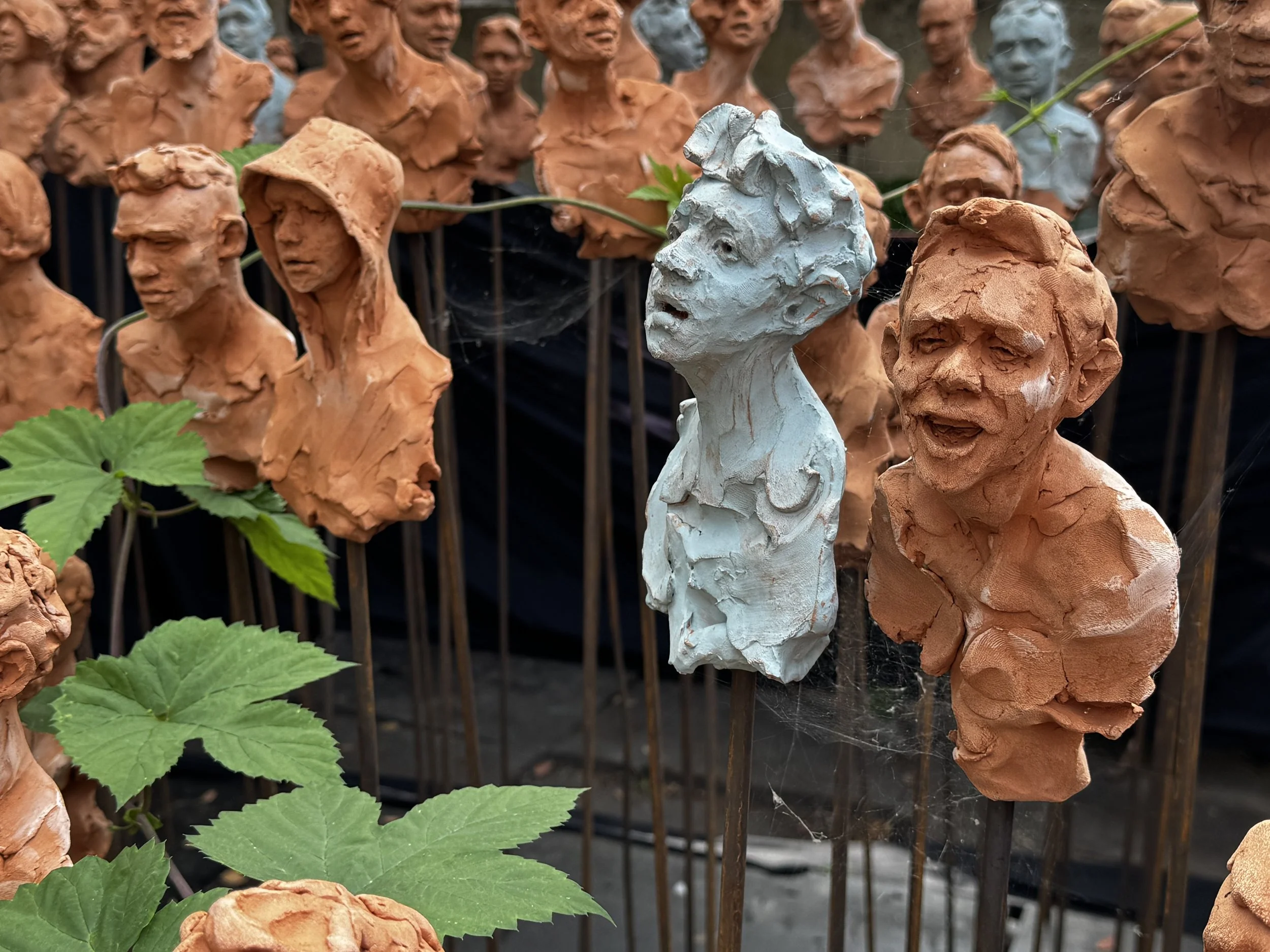
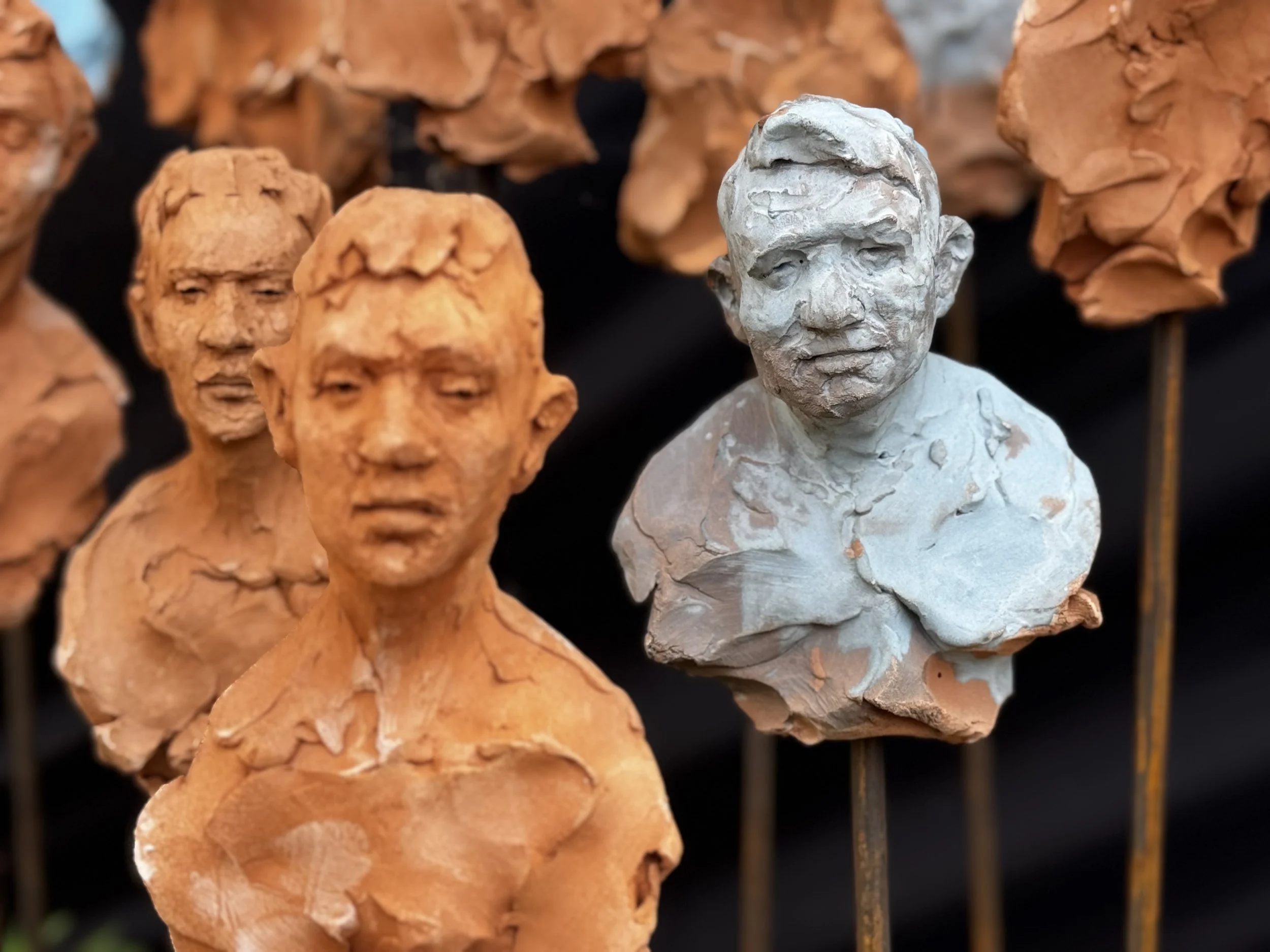
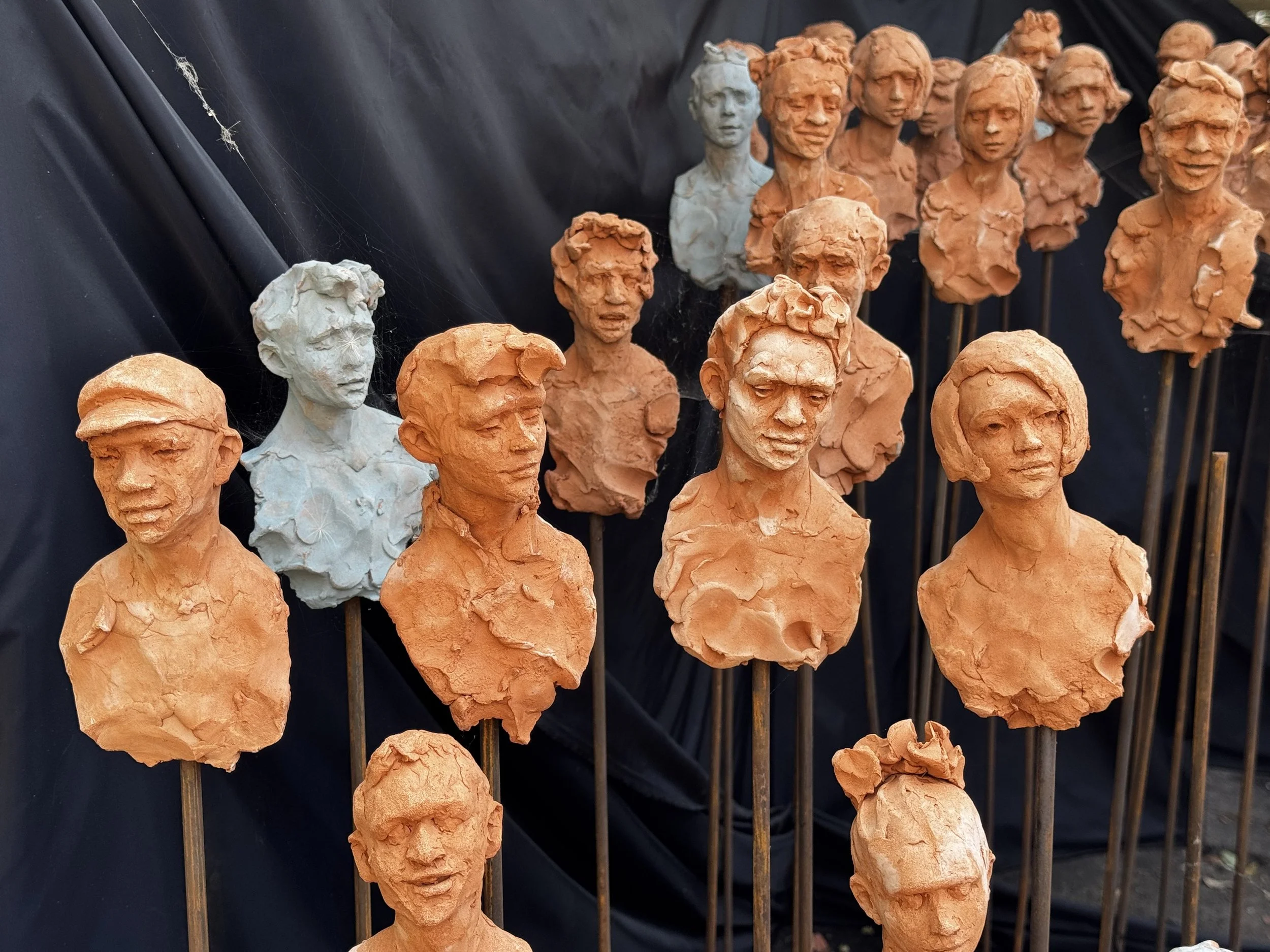
The heads are part of a project that Pandea calls The Choir Of The Innocents. It’s a body of work he originally began in 2010 by creating thousands of much smaller and more simplistic pieces that he would stage in public places. His goal for the new iteration is to have 5,000 — an arbitrary number that is only relevant because it will take volume and scale to achieve his goal to convey “human empathy, human connection and the belief that people are strongest when they come together to support one another”.
I tried to imagine what it would look like to have 5,000 of these displayed altogether and realised pretty quickly that would far exceed the size of the garden in which we were standing. While I’m projecting scale the rhythm to A Face in the Crowd from Tom Petty’s 1989 solo album Full Moon Fever pops into my head. “You were just a face in the crowd” is an apt lyric to be humming as my gaze shifts from head to head to head.
Each is an accomplished work of art but the reason I found the backyard display so compelling is because the mass gathering I witnessed is both a statement and a promise. My appreciation of the details that I could see got lost in the excitement about the concept of what I couldn’t yet fully envision, of what the growing collection might one day become, of what it might one day feel like not to gaze at a cluster of a few hundred but to find myself completely surrounded by a sea of 5,000 clay faces. I am also acutely aware that nothing more could happen.
Large scale outdoor art displays are not inherently hard to stage, just tedious. A lot of time, administration and logistics are involved, and as everyone that has ever made something for the Fourth Plinth will tell you, art at this scale rarely finds a permanent home. Then again, Pandea’s heads can always be sold off individually or in small clusters, but there’s also that nagging little detail that he still needs to sculpt another 1,500. The logistics boggle, but they aren’t insurmountable.
I marvelled at the sea of heads when I first saw them and am hopeful that one day I will be able to look back on this article and think “how quaint” as I revisit my photos of what, compared to Pandea’s vision, is actually just a modest display.
That’s why I like it.
Two heads Five thousand heads are better than one.
Additional reading:
Andrei Pandea: @andrei_pandea
Phil Taylor’s Cool Stuff: @philtaylorscoolstuff
Previously, on Why I Like It:
Jul — Slave Market with the Disappearing Bust of Voltaire (1940), Salvador Dalí
Jun — Millennium Bridge Chewing Gum Art (2013-present), Ben Wilson
May — Asparagus Duo (2023, 2025), Joel Ely / Russell Webb
Want more? Here’s a list of the first three dozen articles in this series.