
Rose Wylie @ Royal Academy of Arts
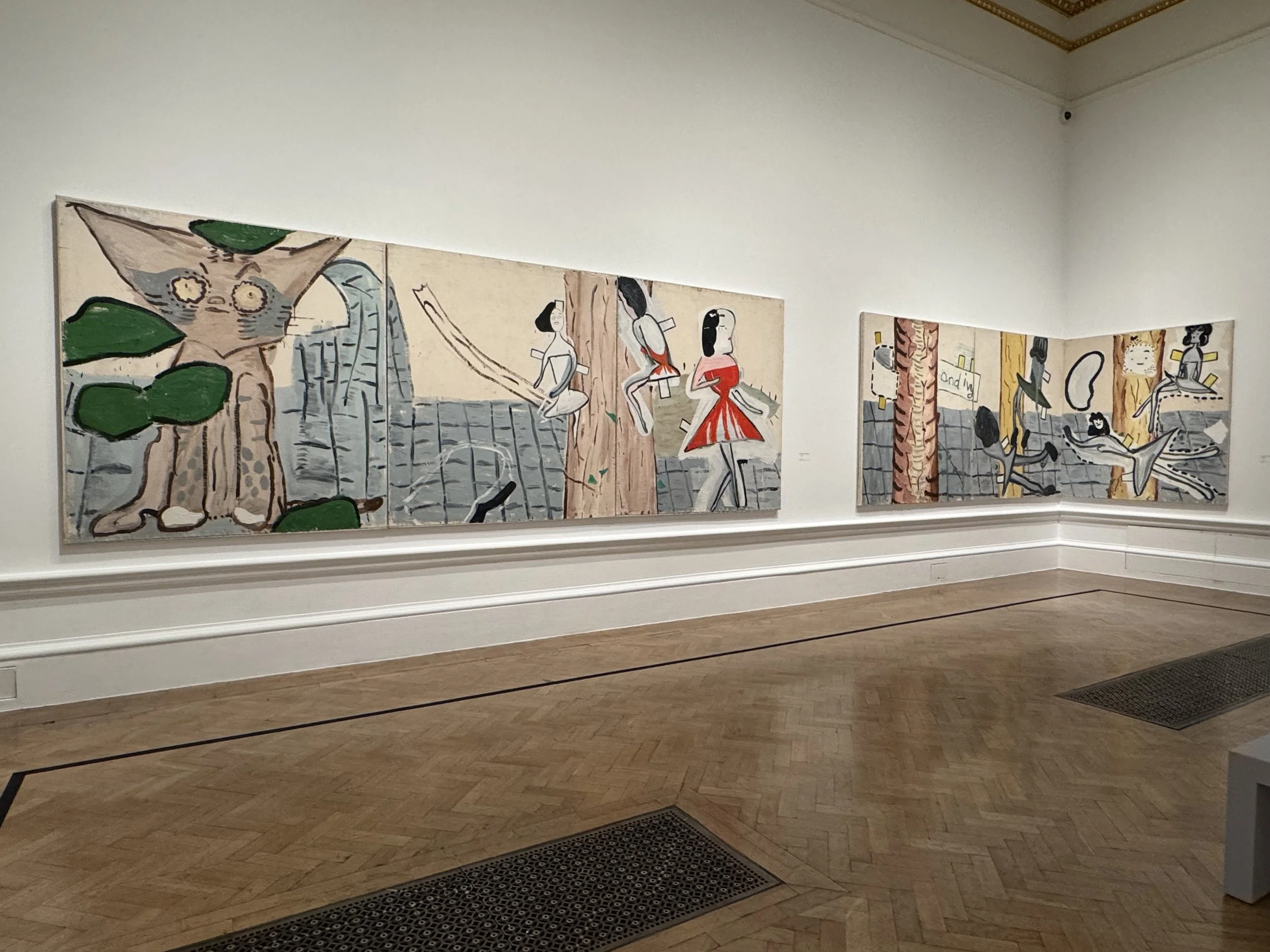
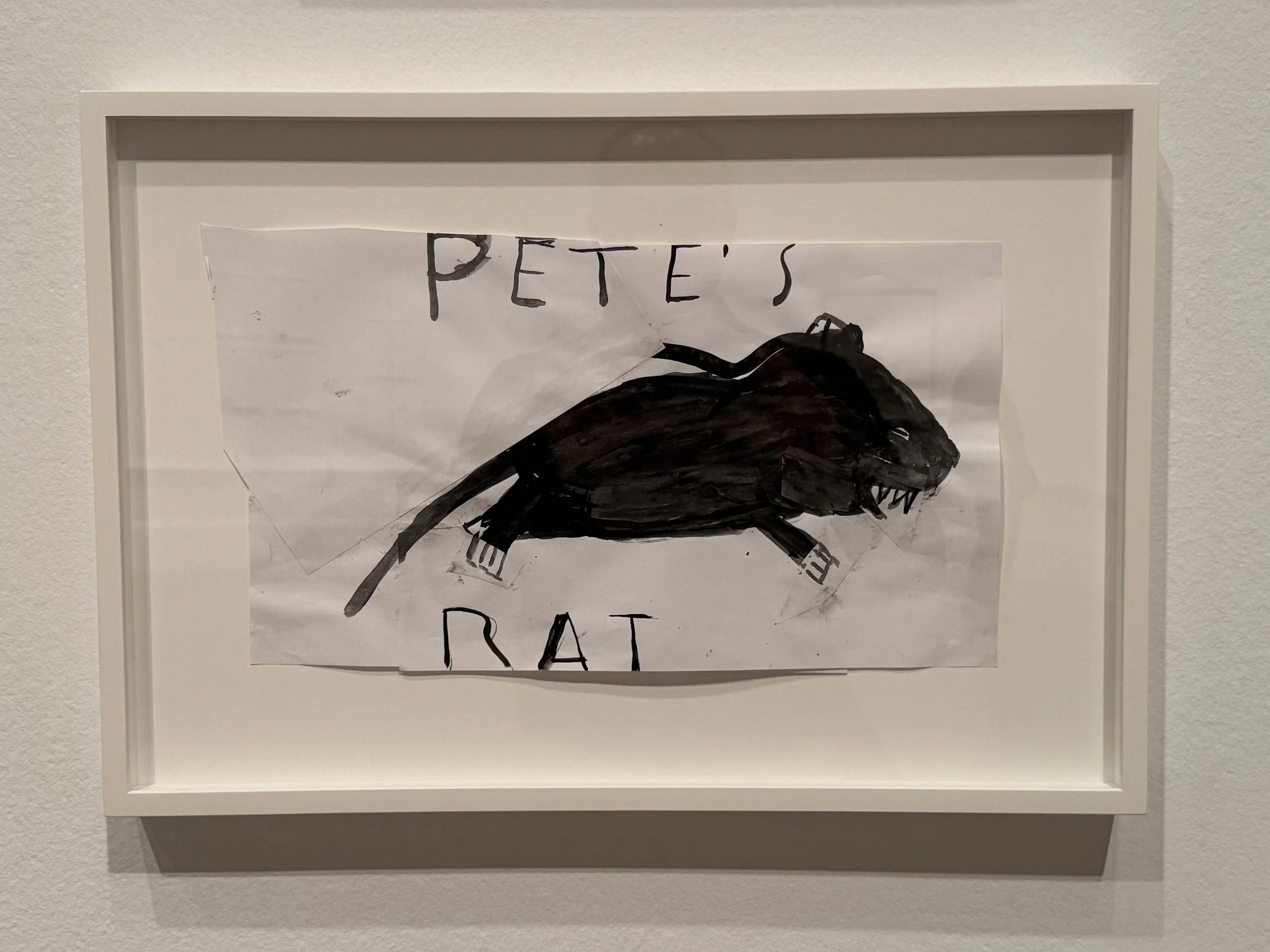
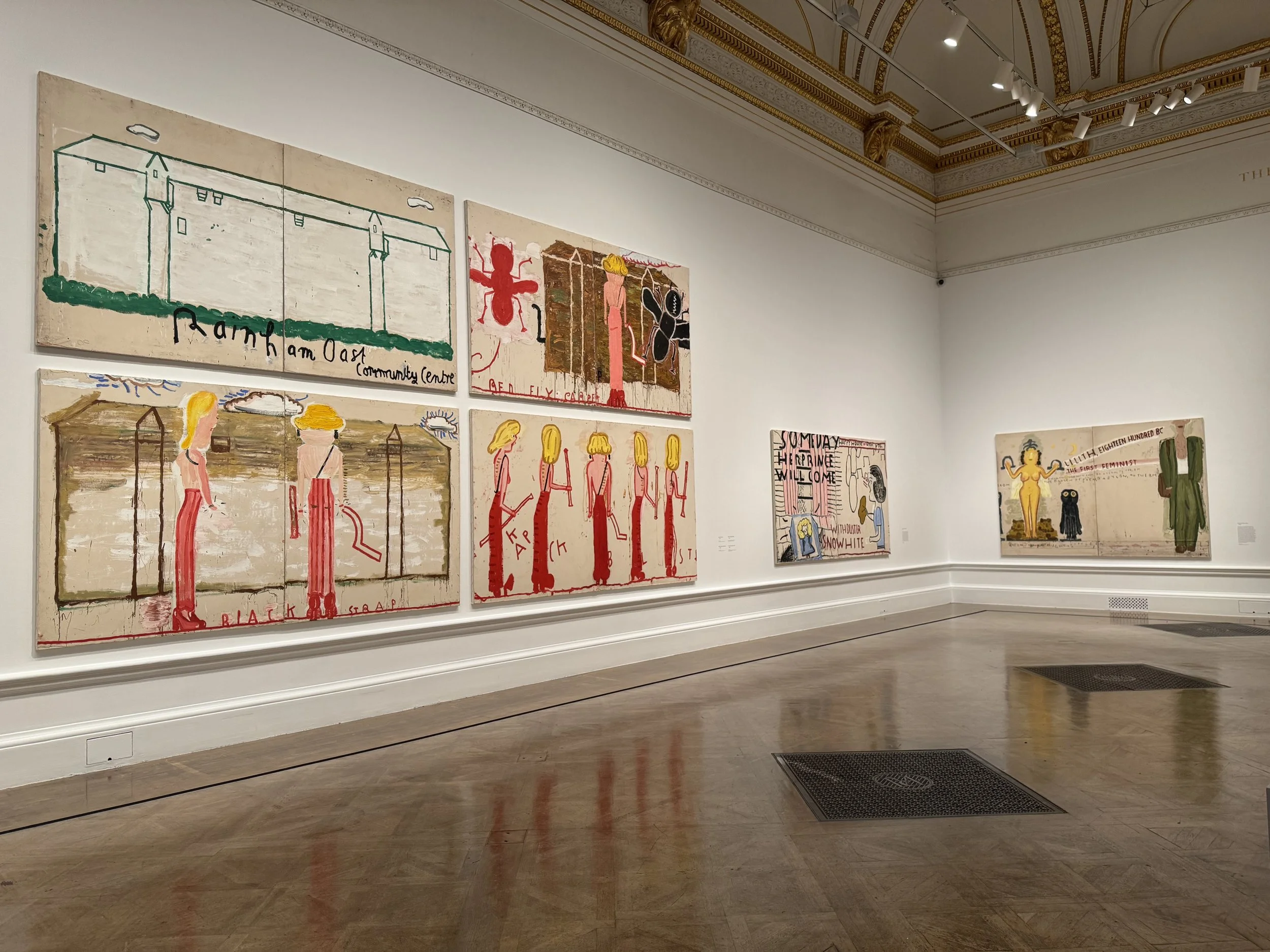
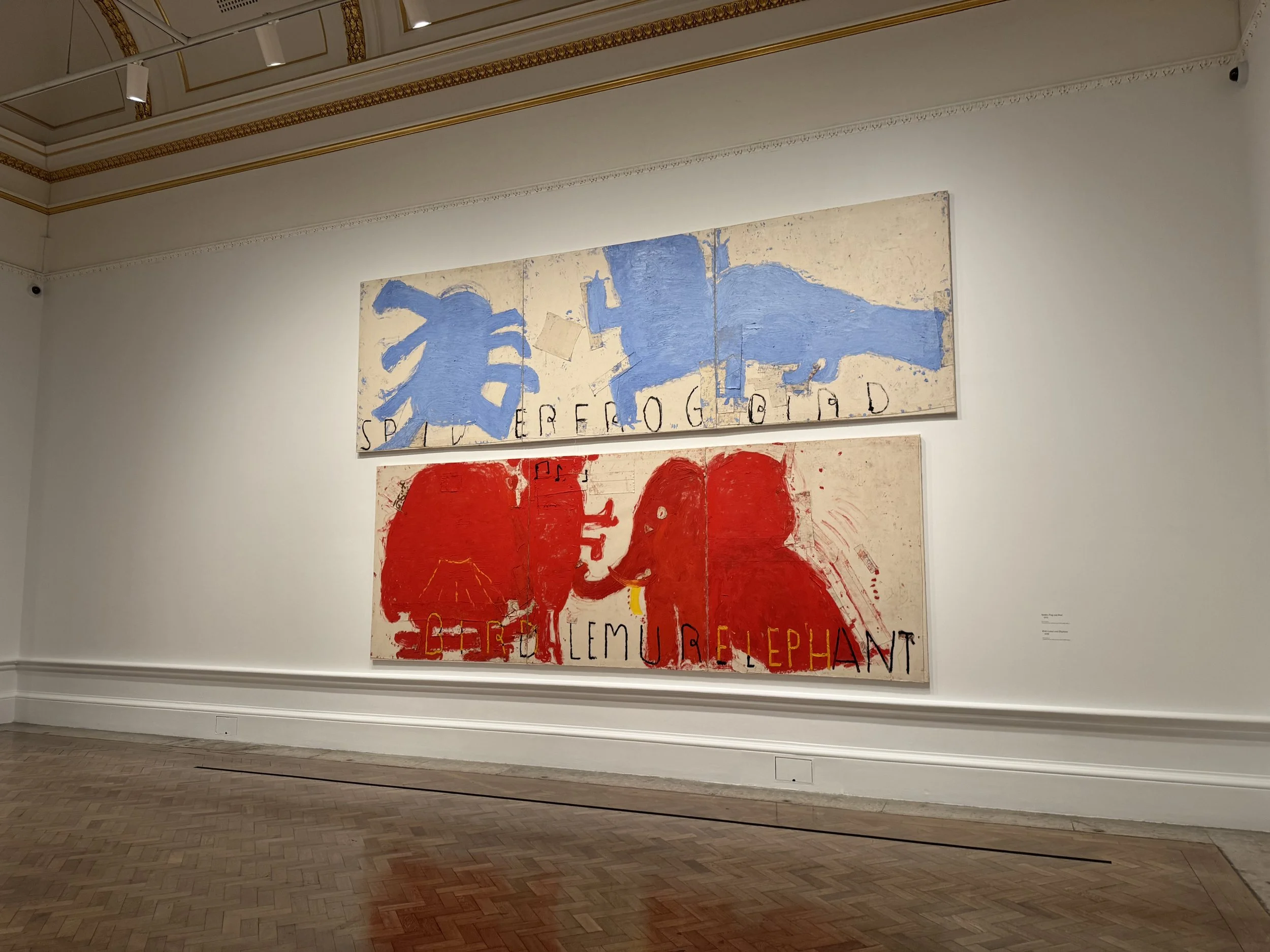
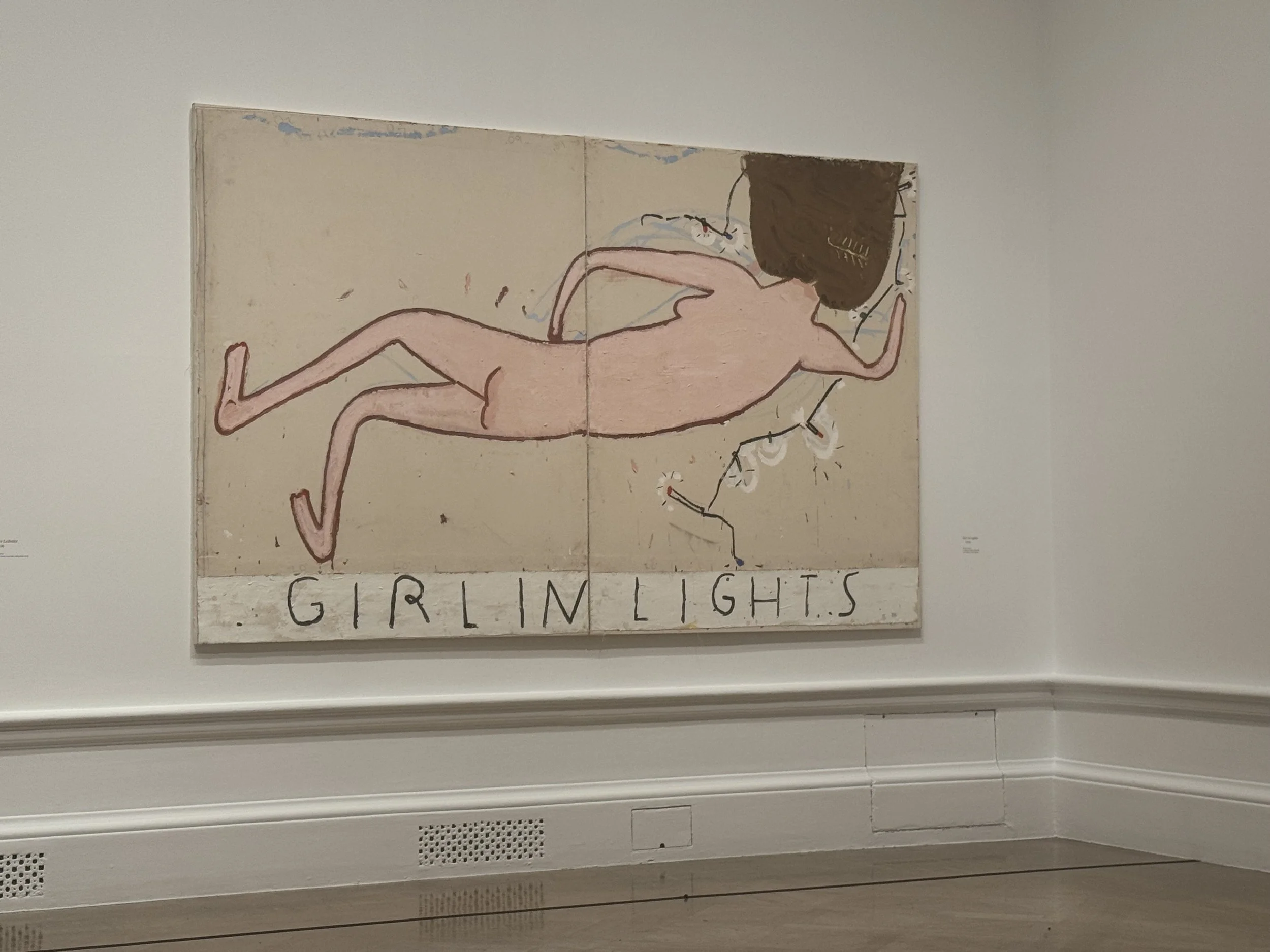
I really wanted to love this show because I’m a recent convert to Rose Wylie’s works. Seeing one of her canvasses hung in a group exhibition is like unexpectedly bumping into your extroverted best friend at a crowded trade show filled with boring salespeople. Her irreverent, many say child-like, visual style distinctly stands out wherever it goes, and I was curious to learn more about her career and to see what treasures would have been loaned for the “first female British painter ever to have a solo exhibition in the main galleries of London's Royal Academy”.
Alas that quote, widely regurgitated in the press, might technically fall foul of UK libel laws since a third of the twelve main rooms have been left empty and roped off. The display spans the last four decades but with very rare exception Wylie maintained the exact same style and approach to subject throughout. The lack of evolution quickly becomes tiresome and relentless to view, and at some point the curators must have acknowledged that even listing the dates was a pointless endeavour (they did anyway) and decided enough’s enough, you get the point, these’ll do.
Despite the repetitive style I found a few I truly adore, although my focus was mostly drawn to charming isolated elements or small, quirky flourishes. Wylie’s loosely figurative, sparsely detailed paintings, often with titles or annotations painted directly onto the canvas, are easily (mis)interpreted as mad diaristic renderings. Though technically not an outsider artist (she received an RCA MA in 1981) the story of her current solitude and late career recognition after a 25 year gap to raise children is rarely written about with anything other than incredulousness. The subtitle of this RA retrospective? “Meet the rebel painter of the British art world.”
Wylie’s gallery acknowledges that her work appears “aesthetically simplistic” and her compositions, if you can call them that, often seem more scattershot than intentioned. It’s an issue that becomes painfully ironic in a room of canvasses woefully depicting scenes from films that are frequently lauded for their cinematography. These ‘tributes’ are no different than seeing a child’s drawing of their favourite toy hung on the fridge with a magnet.
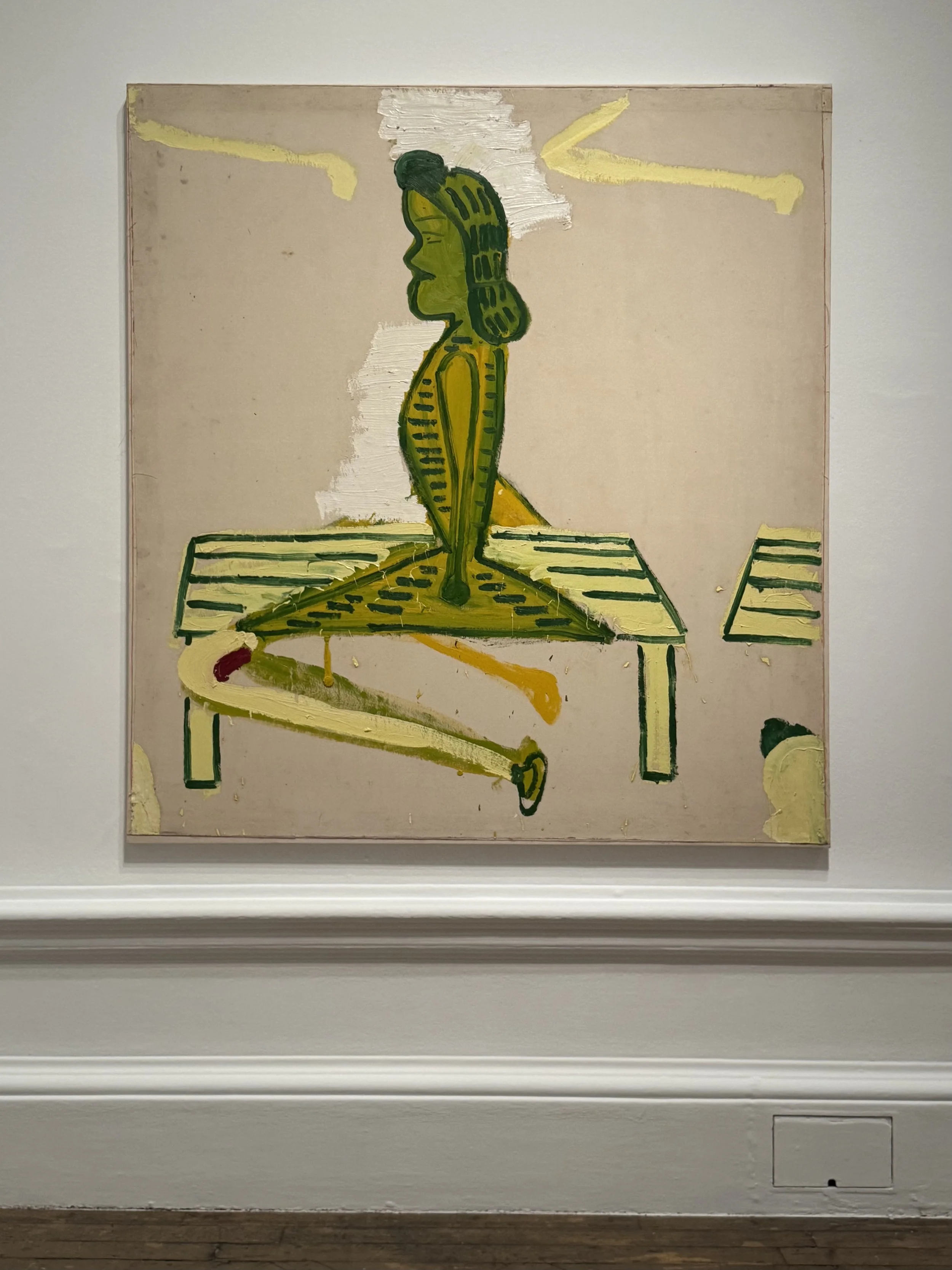
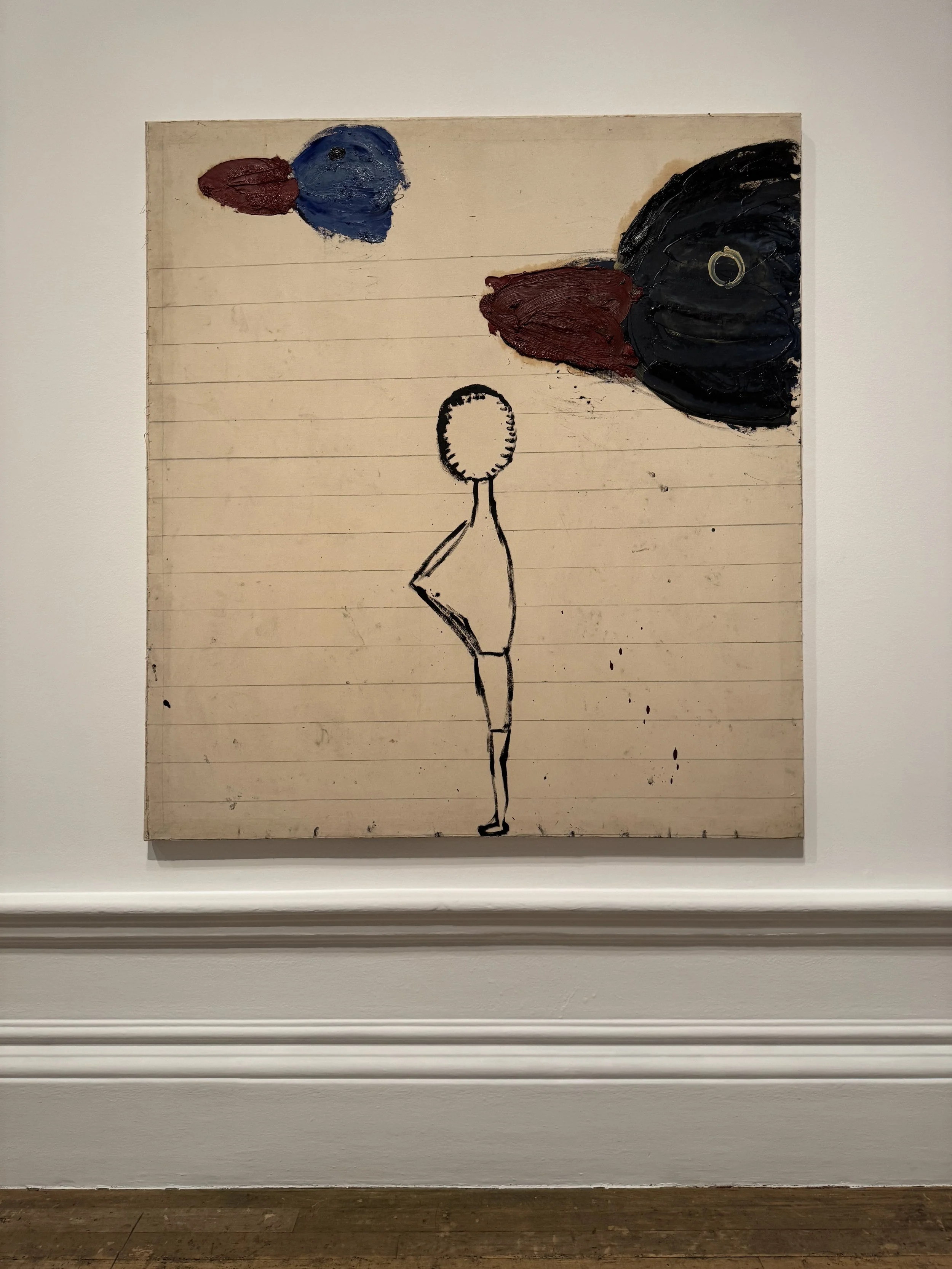
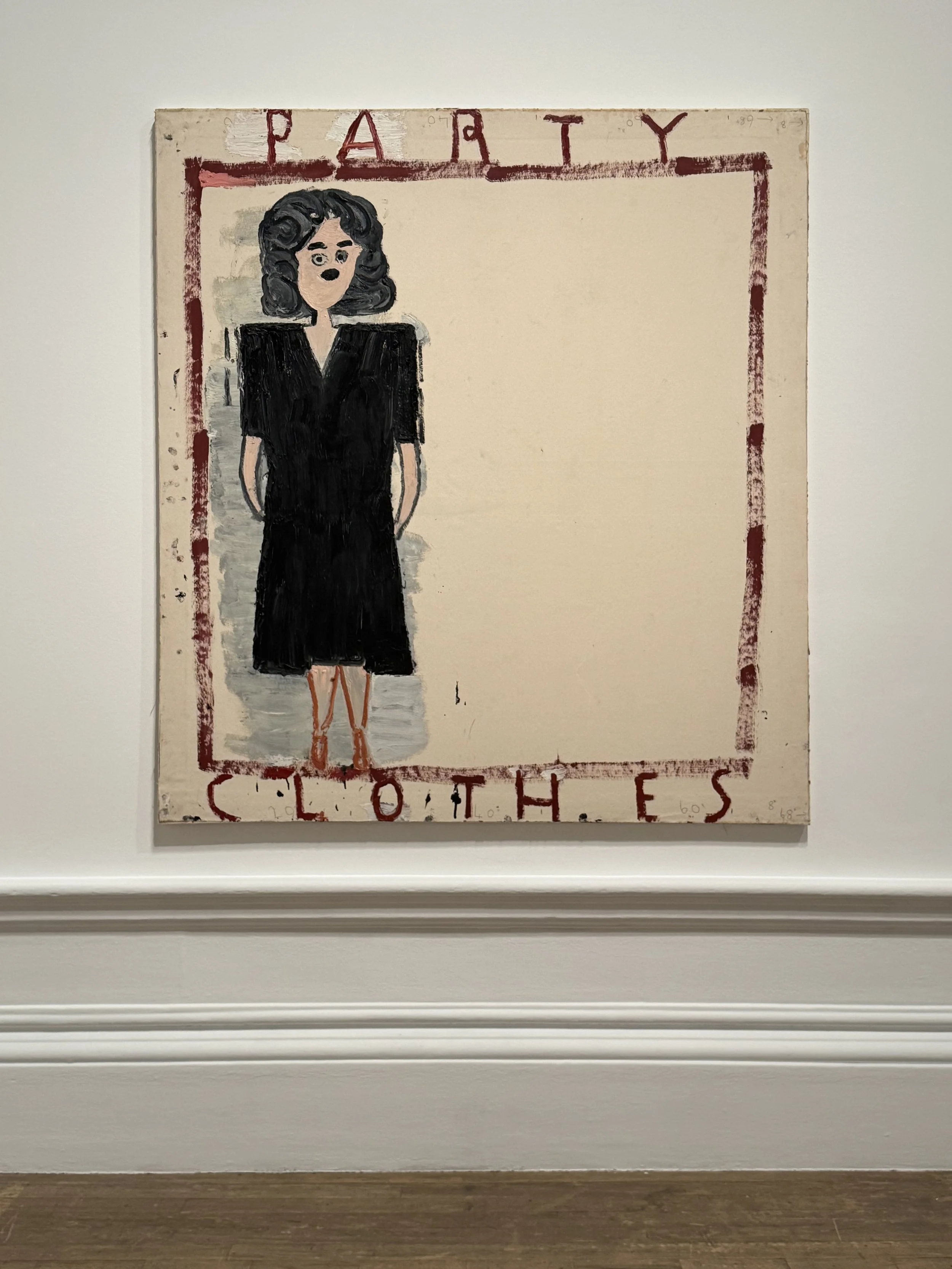
Wylie painted the Duke and Duchess of Argyll because she liked their outfits and throughout the show you’ll notice a very distinct focus on fashion, most especially with the female figures. Most of her imagery aspires to be nothing more than captured memories of her everyday life, and let’s be honest, it’s ok to both paint and enjoy art for superficial beauty. Not every artistic practice has to be rooted in deep meaning, but I guess that’s not something the RA wants to acknowledge when they’re charging £21 a ticket. Most of the wall text tries too hard to assign more importance to these works than they deserve, and the disconnect between what you can see and what the text wants you to see is laughable.
A more honest acknowledgment about Wylie’s lighthearted touch would have better served the show and created a more deserved sense of celebration of her accomplishments. It’s obvious from even a casual glance at Wylie’s canvasses that they aren’t trying to be deeply philosophical. They’re more like the casual anecdotes you use to warm up a friend while you wait for the coffee to cool and the main conversation to begin. That’s the strength of her art, but the failing of the show. This retrospective is lively and fun and filled with silliness, but too much small talk eventually becomes tedious.
Plan your visit
‘The Picture Comes First’ runs until 19 April 2026.
Tickets from £21 adult / discounts & concessions available / children under 16 free
Visit royalacademy.org.uk and follow @royalacademyarts on Instagram for more info about the venue.
Visit the Wikipedia page and the artist bio page at David Zwirner for more info about the artist.
Want more London art news and reviews?
Subscribe to the Weekly Newsletter. It’s FREE!