
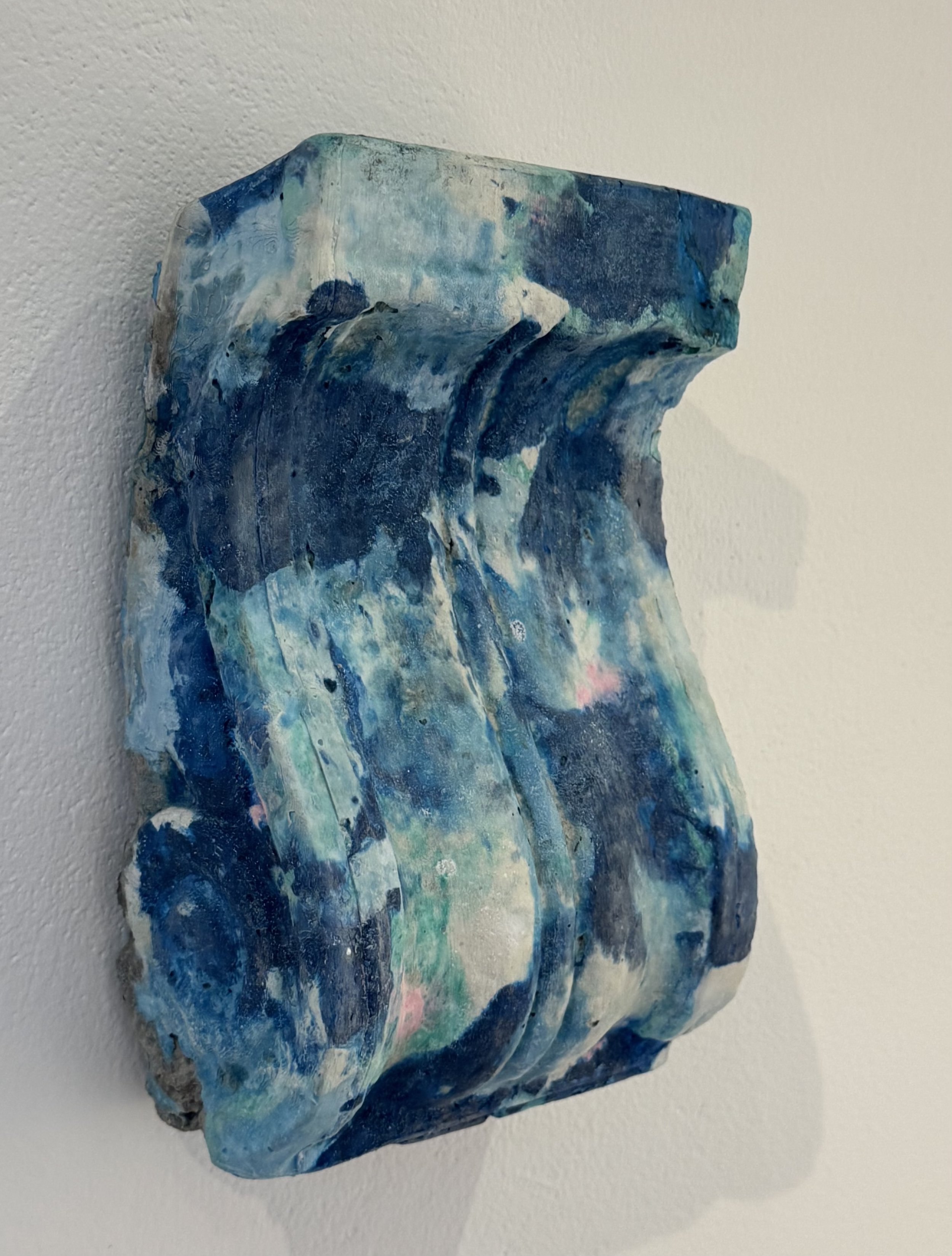
Corbel Ammonoidea (2024)
Catriona Robertson (b.1987)
Corbel Ammonoidea (2024)
Paper-concrete, recycled newspaper pulp, cement, sand, pigment
10 cm x 25 cm x 13 cm
Private collection of the author
Catriona Robertson is best known for large scale sculptures often described as giant worms. Except visually they’re a ramshackle assemblage of what appears to be concrete remnants, aluminium siding and other construction waste. It wouldn’t be too far fetched to imagine they’ve arrived from an alternate universe in which Dr. Frankenstein was a frustrated architect before he turned to mad science.
One of her latest creations is currently on display in this year’s annual Frieze Sculpture in Regent’s Park. It porpoises up out of the lush green grass before it torques and turns and seems to have fallen over due to its own imbalance. Here’s an image along with a sample of similar works I’ve visited over the past four years.
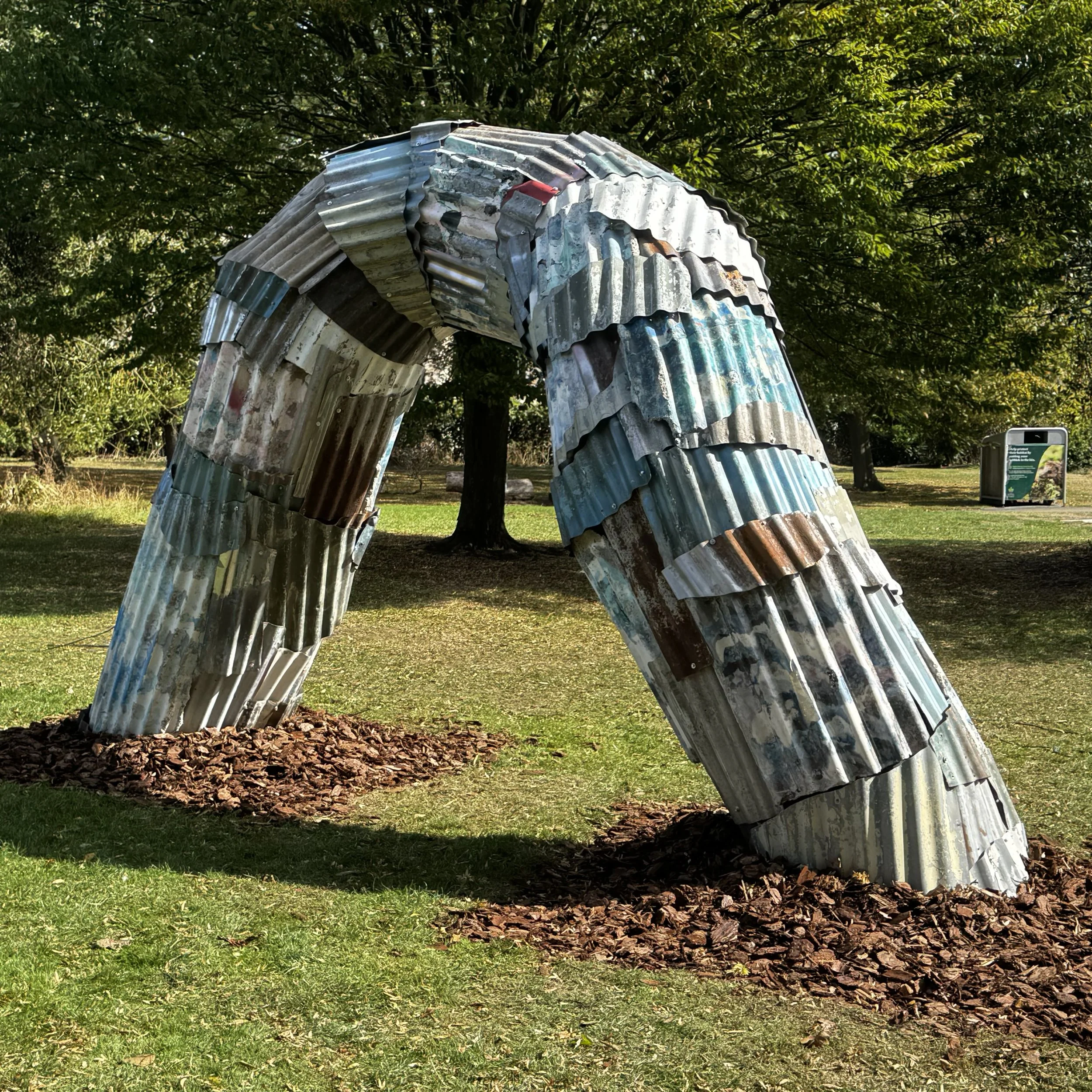
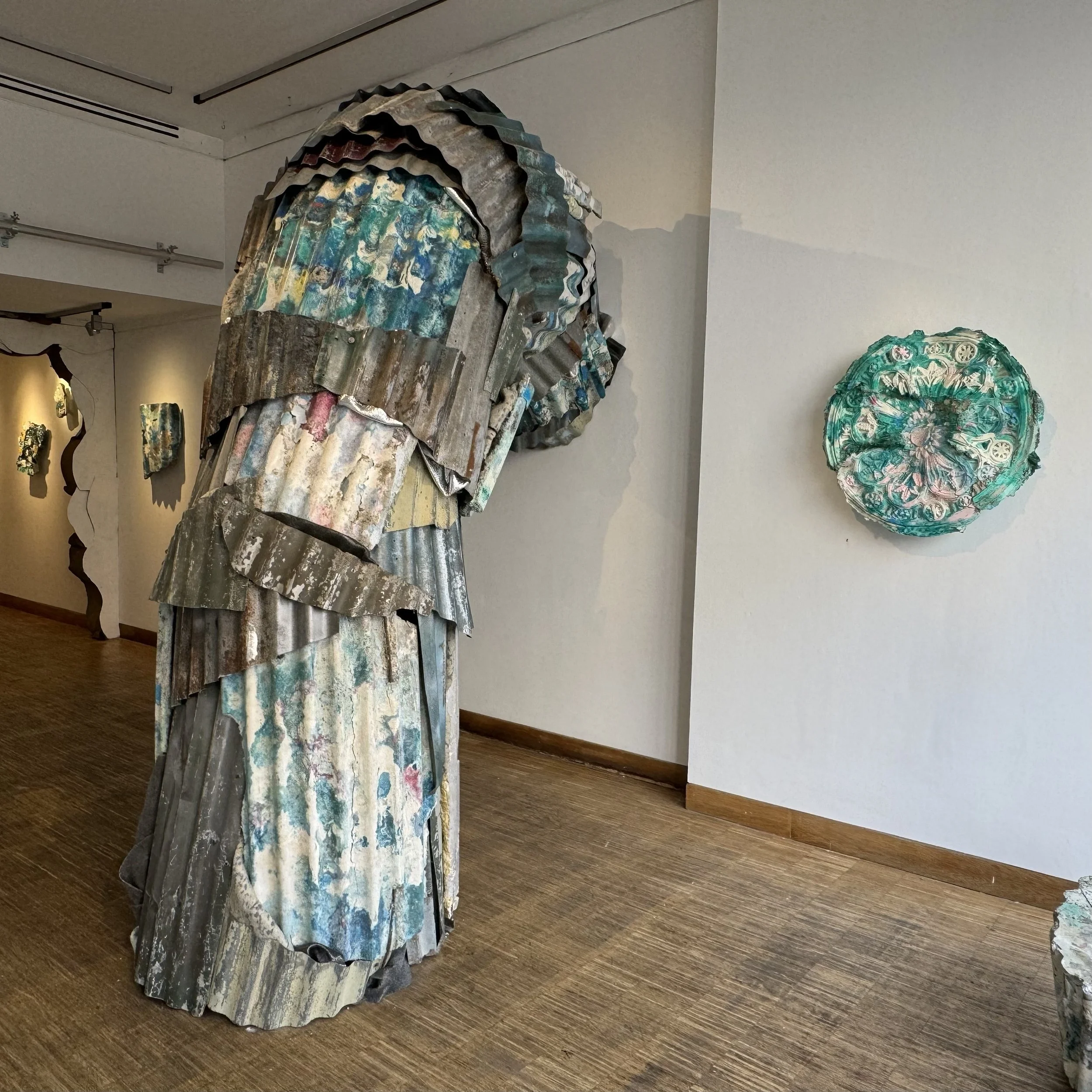
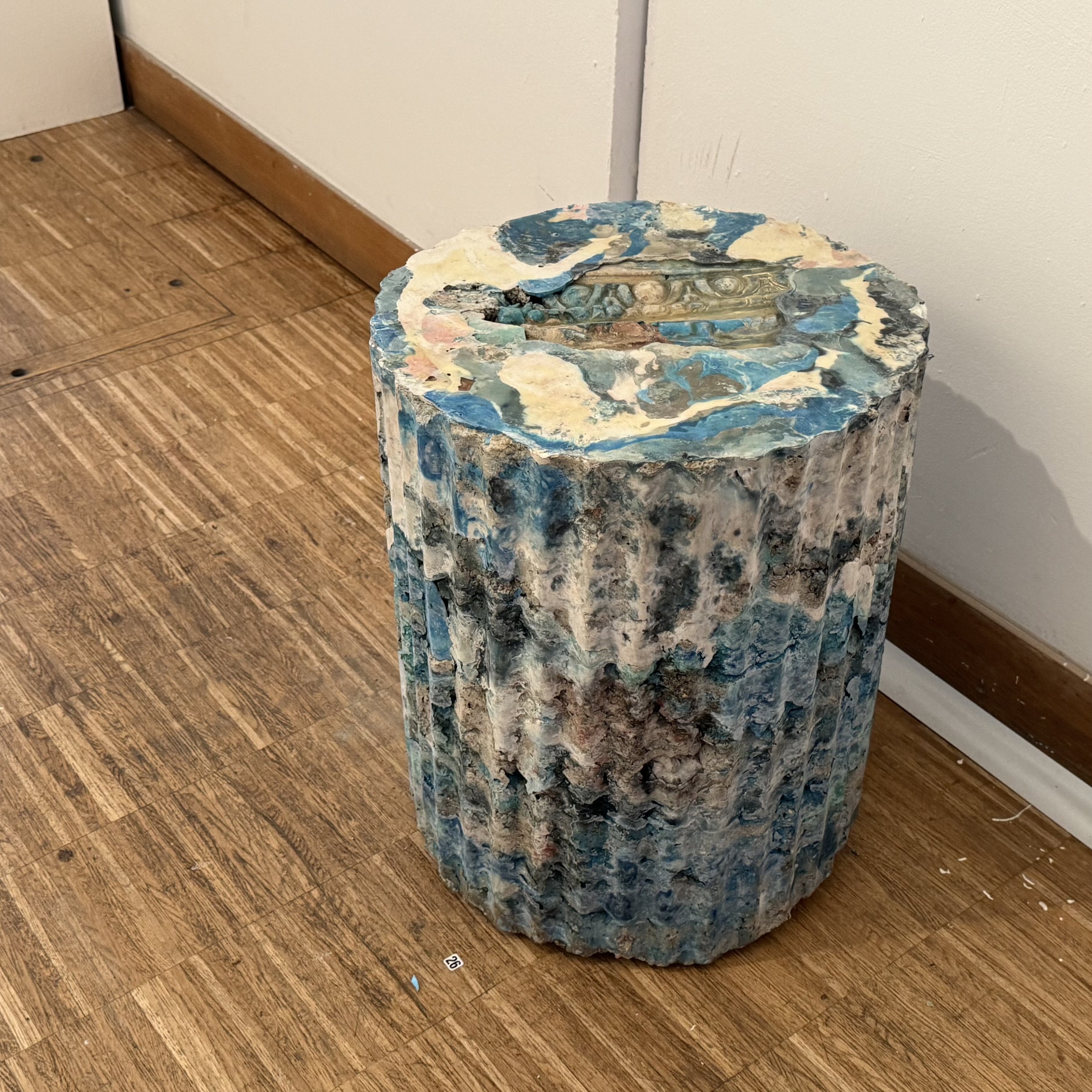
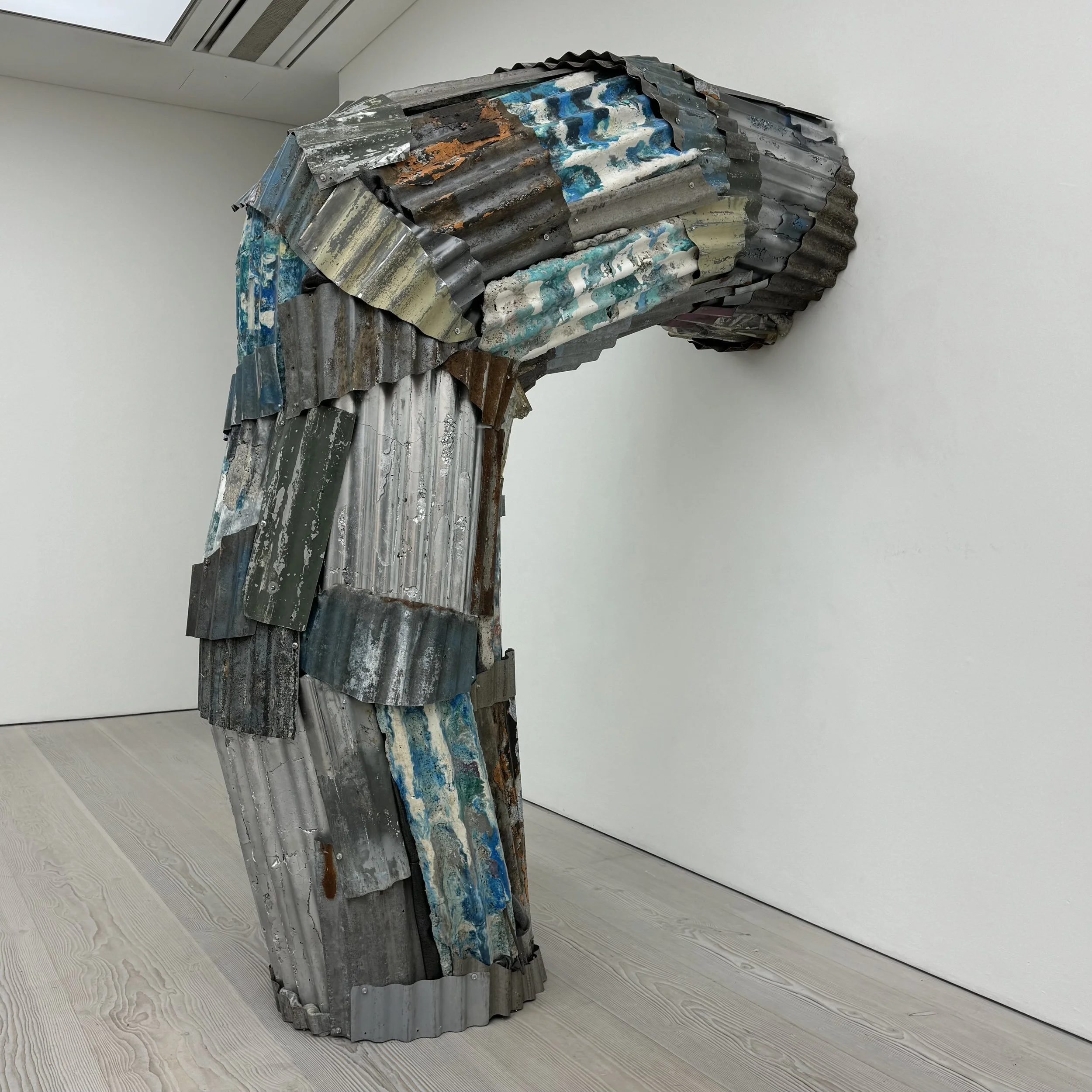
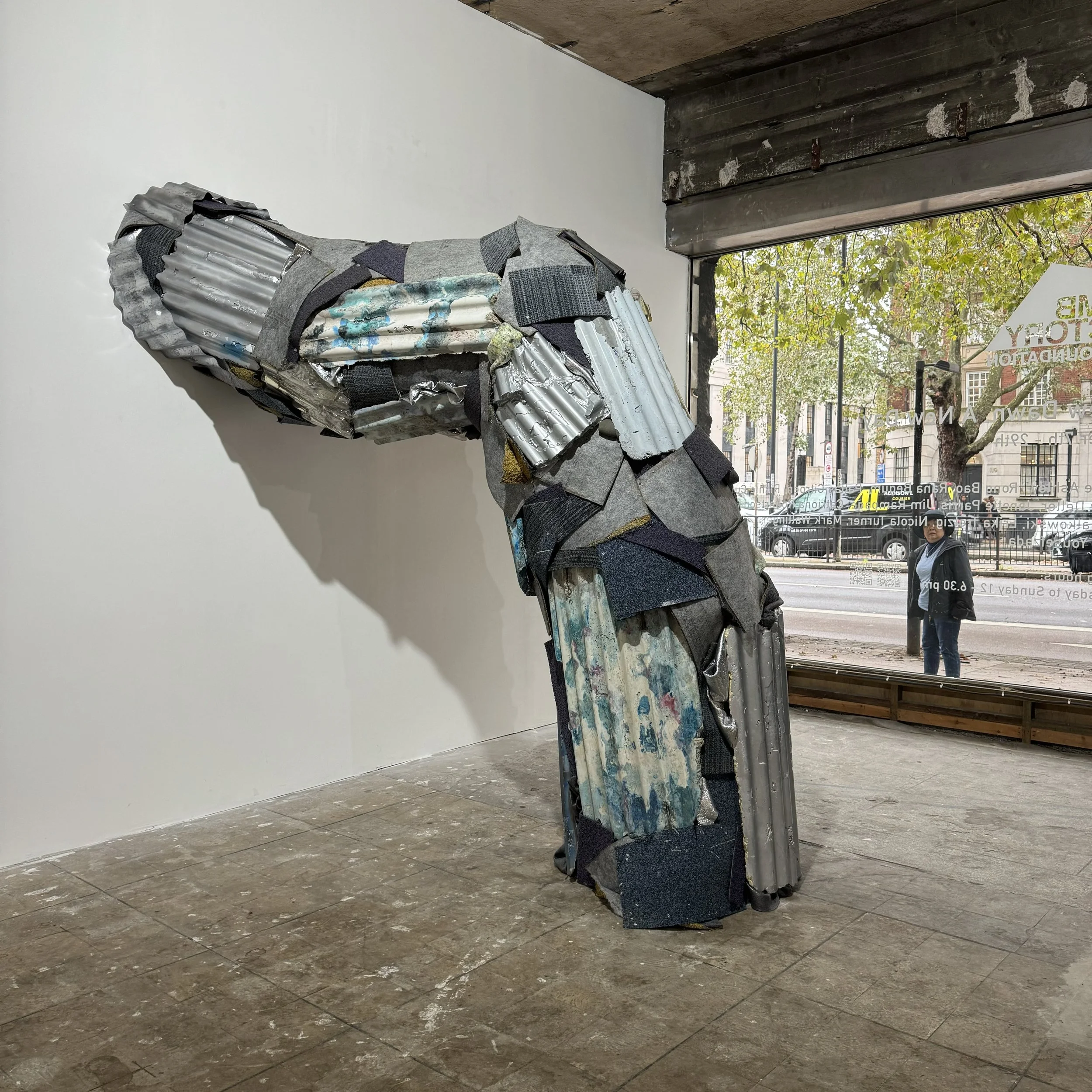
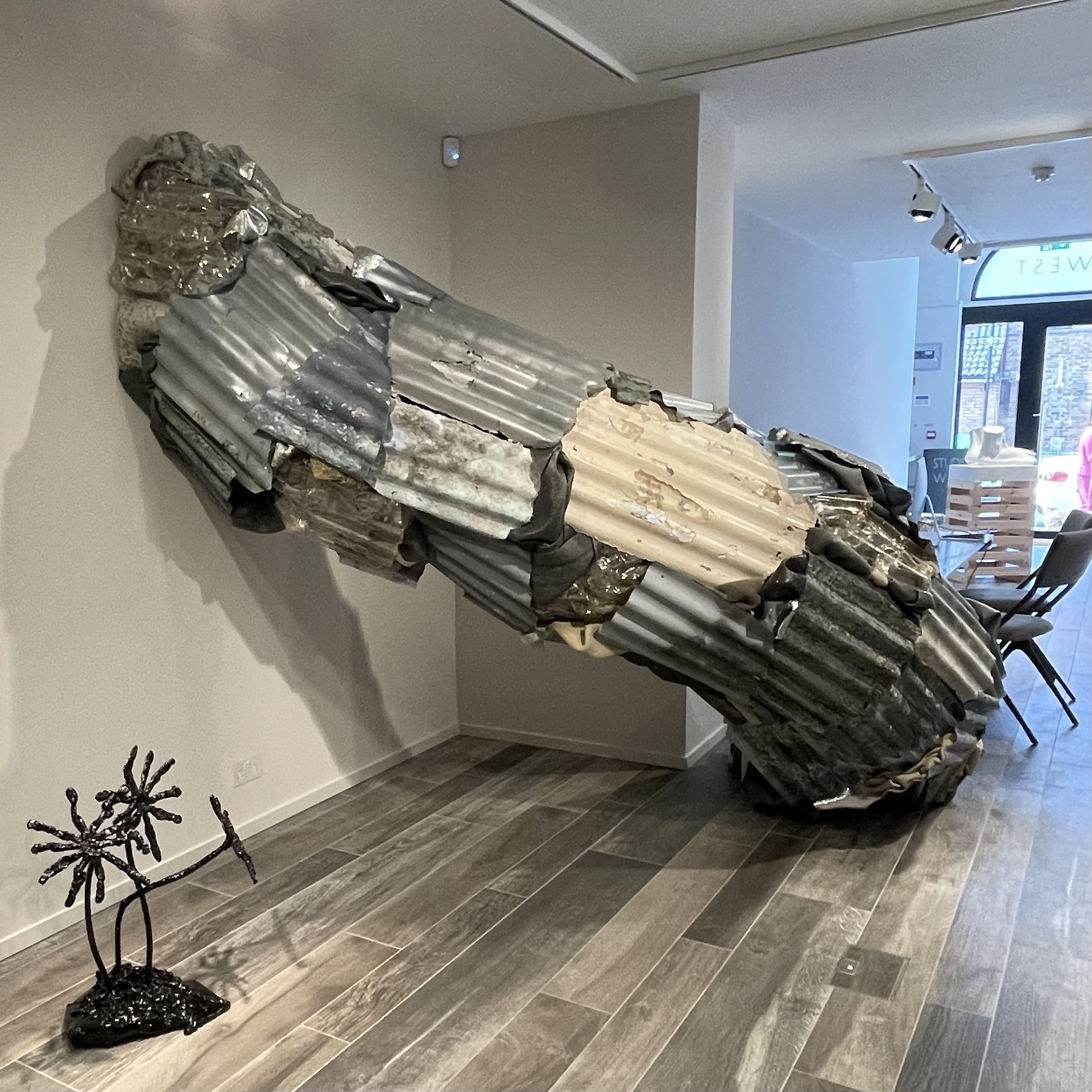
I adore these creations. They draw my eye from afar and lure me closer. They look heavy and incredibly precarious so I suspiciously circumnavigate them, at least as much as each installation allows, before ducking my head and carefully passing underneath, crossing my fingers as I do as if I was chancing fate by walking under a ladder. I would love to have one of these works in my private collection but the thought always results in me uttering the same phrase that a friend’s mum says when she contemplates a large art acquisition: “…but where would I put it?”.
So when I chanced upon one of Robertson’s small works hanging in a show last December I got giddy. It’s a typical work for her practice as regards material and colour. In fact, it looks like a fragment that might have “fallen off” one of her larger-than-life sculptures only to be sold for a five finger discount. It is, in fact, a one off, and I was only too eager to acquire it as an early Christmas gift to myself.
It’s called Corbel Ammonoidea, a very descriptive name that probably requires some explanation. A Corbel is a projection jutting out from a wall to support a structure above it, and Ammonoids are extinct, typically coiled-shelled cephalopods most closely related to living octopuses and squid. The word ‘extinct’ is appropriate because much like fossils Robertson’s faux architectural artefacts are not entirely comprised of what they resemble.
Corbel Ammonoidea is listed as being made of paper-concrete, recycled newspaper pulp, cement, sand and pigment. A Frankenstein mixture indeed, and that explains why it’s a heck of a lot lighter than it looks. It’s one of ten works I’ve hung in what I call my architecture corner, filled with depictions of buildings or structures in both literal and abstract ways. It’s a section of my collection that makes me feel a bit like Sir John Soane, who crammed his Drawing Office full of plaster casts of cornices, mouldings, spandrels and capitals from ancient antiquities he encountered in foreign lands so that he could study and appreciate them daily.
Alexander Calder made mini mobiles and Christo and Jean-Claude famously secured funding by selling scale models and renderings of their proposed work. Those are just two of many examples of artists with grandiose sculptural ambitions creating smaller, household-friendly objects as a way to both fund their practice and help collectors feel close to their art. It’s a smart move for everyone, and over time these tiny offerings often become highly sought after secondary market works. At the recent British Art Fair a miniature bronze that Henry Moore made of one of his reclining figures was being sold for £90k. That’s one expensive paperweight!
I’d be lying if I said I hadn’t wondered what Corbel Ammonoidea might be worth some day in the distant future, but I am not an investment collector. I view collecting art as a highly personal endeavour, and the money I spend is first and foremost an investment in my happiness. Being able to have a small piece of Robertson’s grand visions on my wall is a way to bring me closer to her work, and spurs daily reminders of the emotions her huge sculptures have inspired on the limited occasions that I have been able to experience them outdoors or in large scale environments.
That’s why I like it.
Every little helps.
Additional reading:
Artist Instagram - @catrionart
Artist Website - catrionarobertson.co.uk
Previously, on Why I Like It:
Sep - SHARKS! (2020), Jaimie Shorten
Aug — The Choir of the Innocents (2010-present), Andrei Pandea
Jul — Slave Market with the Disappearing Bust of Voltaire (1940), Salvador Dalí
Want more? Here’s a list of the first three dozen articles in this series.